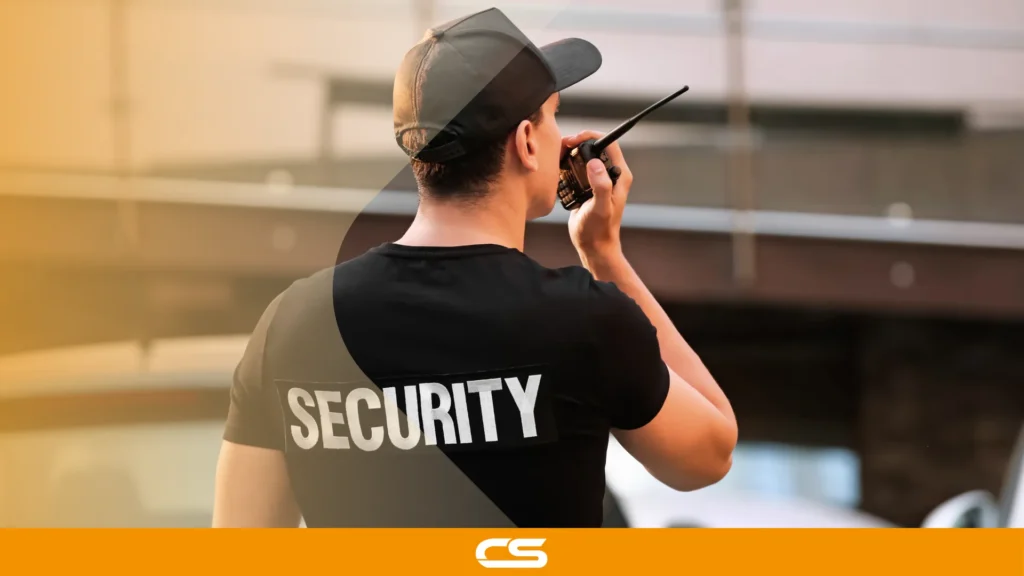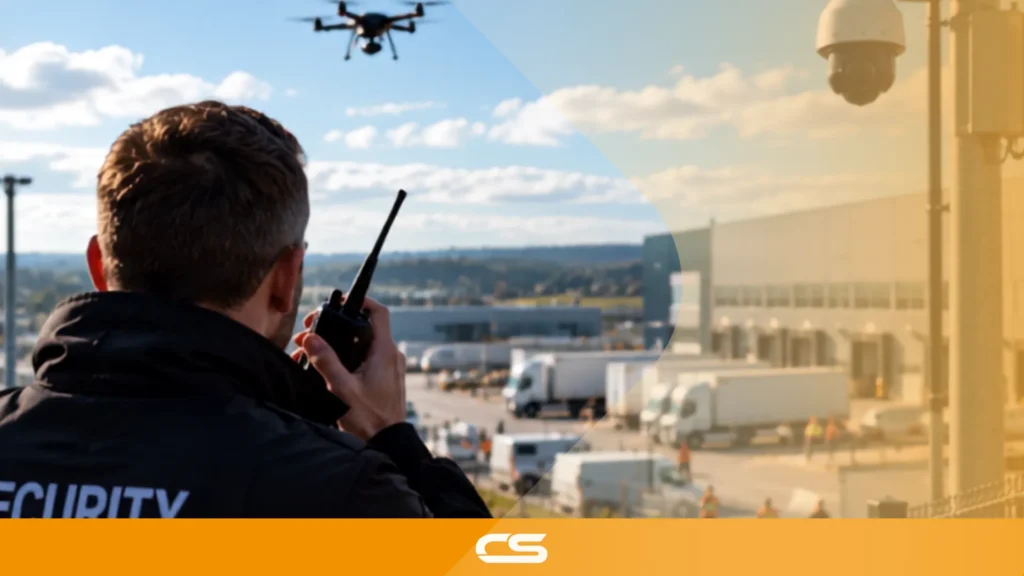
Lone worker protection is essential where guards, patrol officers or close-protection personnel operate away from immediate supervision. A radio, alarm or mobile device can help, but the equipment is only one part of the solution. The real value comes from a clear process that turns an alert into a monitored, verified and coordinated response.
For security managers, the challenge is to protect staff without slowing down the operation. That means combining lone worker alarms, man down features, reliable radio coverage, secure radio communications and control-room procedures into one working system.
Table of Contents
Why Lone Worker Protection Matters for Security Teams
Where lone security personnel are most exposed
Security staff often work alone by design. A single guard may patrol a perimeter, manage a back-of-house entrance, check a service yard, respond to an alarm or hold a static position away from the main team. On large estates, hotels, events, remote facilities and high-value sites, that person may be minutes away from support.
Why communication failure changes the level of risk
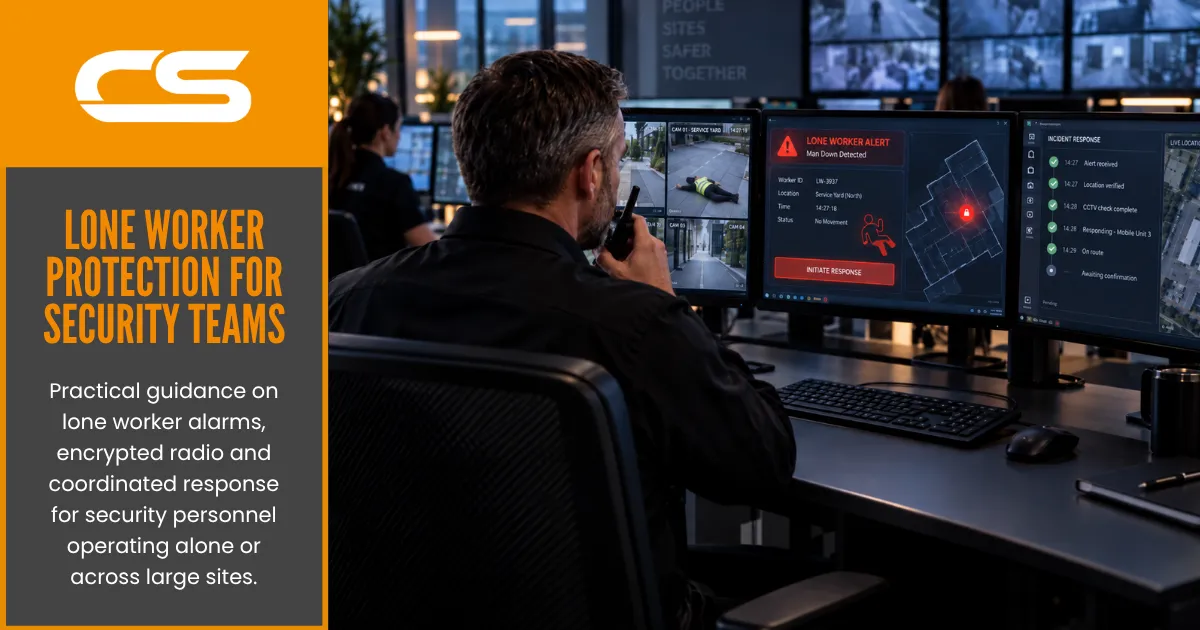
A lone worker alert should answer three questions quickly: who needs help, where are they and what should happen next? If any of those points are unclear, the response can become slower and less controlled.
This is why lone worker protection should be planned as part of a complete security team communications system, rather than as a standalone device purchase.
What Should a Lone Worker Alarm System Include?
A lone worker alarm system should give a person a simple way to request help, while also allowing the system to raise an alert if that person is unable to respond. For security teams, it should be designed around the site layout, patrol routes, shift patterns and the people who will manage alerts.
Manual lone worker alarms and panic activation
Manual activation is the basic requirement. A guard should be able to trigger an alarm through a dedicated radio button, wearable panic alarm or approved smart device. The action should be easy under pressure and should not depend on navigating through menus.
Where discretion matters, dedicated staff panic alarm systems can support lone workers without drawing attention to the incident.
Automatic man down alarms
A man down alarm is designed for situations where the user may be unable to press a button. It can be triggered by inactivity, tilt, impact or other programmed conditions, depending on the device and configuration.
Tilt, inactivity and missed check-ins
These settings need careful configuration. If they are too sensitive, false alarms may become common. If they are too relaxed, the alert may not trigger quickly enough. Missed check-ins can also escalate to a supervisor or dispatcher when a patrol officer fails to confirm their status.
Location and monitoring
Location information helps turn an alarm into a response. Outdoor GPS, indoor beacons, radio system data, Wi-Fi positioning or site mapping may all play a role. Monitoring is equally important. An alarm that appears on a screen nobody is watching is not a safety process.
Lone Worker Alarms vs Man Down Alarms
What is a lone worker alarm?
A lone worker alarm is a personal safety alert used by someone working without close or direct supervision. It may be a radio function, wearable device, fixed button or app-based alert.
What is a man down alarm?
A man down alarm is an automatic alert that can trigger when the device detects that the user may be incapacitated. It is often used where a person could fall, be injured or be unable to press an emergency button.
When security teams need both
Security teams often benefit from both functions. A manual alarm lets the user call for help discreetly when they recognise a threat. A man down alarm provides a backup if they cannot call for help themselves.
Choosing Two-Way Radios for Security Guards Working Alone
Lone worker radio features
A lone worker radio should support clear voice, emergency signalling and practical role-based configuration. Useful features may include a dedicated emergency button, man down function, GPS location, status messages, priority calling and discreet accessories.
Good channel planning keeps routine traffic controlled while allowing emergency calls to cut through. Comms-Spec provides complete two-way radio systems including devices, coverage infrastructure, programming, training and support.
Coverage and temporary deployments
Coverage is often the difference between a useful alarm and a false sense of safety. Security managers should test basements, service corridors, car parks, plant rooms and perimeter areas. For venues, events or short-term operations, radio hire for security operations may be more practical than purchasing a permanent fleet.
When Do Security Teams Need Encrypted Radio Communications?
What radio encryption protects
Encrypted radio communications help protect sensitive operational information from unauthorised listening. Security teams may discuss patrol locations, incident details, access points, guest movements, executive protection movements or response instructions.
Digital radio does not automatically mean encrypted radio
A common mistake is to assume that digital radios are automatically secure. Digital radio can improve audio quality, channel efficiency and feature availability, but encryption is a specific capability that must be supported and correctly configured.
When secure channels are appropriate
Secure radio communications are particularly relevant for close protection, high-value estates, luxury properties, sensitive events, critical infrastructure and any environment where unauthorised monitoring would create operational risk.
How Lone Worker Protection and Secure Radio Communications Work Together
From alarm activation to control room
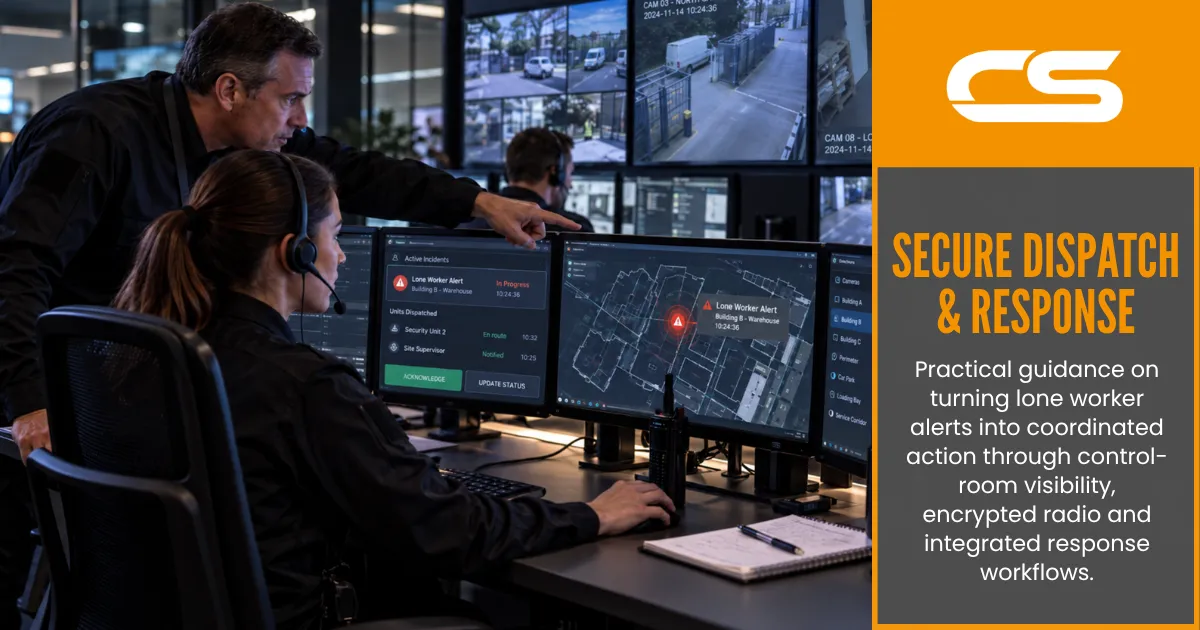
The strongest process connects the user, the alert, the control room and the response team. A workflow may start with a manual panic alarm, missed check-in or man down trigger. The control room receives the alert, identifies the user, checks the location and confirms whether immediate dispatch is required.
A security dispatcher console can support this by giving supervisors a clearer view of communications, team status and alarm handling from one interface.
Verification through CCTV and situational awareness
Verification helps prevent the response from being blind. Integrated security systems can connect CCTV, alarms, access control, panic alerts and communications so responders receive useful information instead of disconnected signals. On large estates or wide-area sites, UAV security can also support incident verification where aerial visibility is appropriate.
Secure dispatch of the response team
Once an alert is verified, responders need instructions they can trust. Encrypted radio channels can help protect those instructions, while clear talkgroup structure keeps the incident away from routine traffic where needed.
How to Specify Lone Worker Protection for Your Site
Before selecting equipment, define the operational requirement. The best solution for a hotel night team may differ from a construction security patrol, a private estate, a port, a remote facility or a close-protection team.
Questions to answer before choosing equipment
- Where do people work alone, and at what times?
- Which areas have weak mobile, Wi-Fi or radio coverage?
- Who receives lone worker and man down alarms?
- How quickly must alerts be acknowledged?
- Do responders need indoor or outdoor location information?
- Which communications should be encrypted?
- What happens if the primary network fails?
- How will users be trained and tested?
Training and operating procedures
Training confirms that users know how to trigger an alert, cancel false alarms and respond to pre-alerts. Supervisors need to acknowledge alerts, escalate incidents and record what happened. Periodic testing should confirm that devices are charged, routes are correct and coverage remains suitable.
Security with Comms-Spec
Comms-Spec designs, supplies and supports communications and integrated security systems for demanding environments, including security teams, luxury properties, events, remote operations and high-value sites.
To discuss lone worker protection, man down alarms, encrypted radio communications, dispatcher tools, CCTV and response workflows, contact Comms-Spec through the enquiry page.
Lone Worker Protection FAQs
What is lone worker protection?
Lone worker protection is the process of keeping people safe when they work without close or direct supervision. In a security environment, it usually combines emergency alerts, man down features, location information, monitoring and a defined response procedure.
What is the difference between a lone worker alarm and a man down alarm?
A lone worker alarm is usually triggered manually or through missed check-ins. A man down alarm is designed to trigger automatically if the device detects that the user may be incapacitated.
Can two-way radios be used for lone worker protection?
Yes. Suitable two-way radios can support emergency buttons, man down features, GPS location, priority calls and discreet accessories, provided coverage, monitoring and training are in place.
Are digital radios automatically encrypted?
No. Digital radio and encrypted radio are not the same thing. Encryption must be supported by the radio system and correctly configured.
Who should receive a lone worker alarm?
The alert should go to someone who can act immediately, such as a control room, supervisor, dispatcher or nominated response team.