
UAV Platform Types for Security Operations
A UAV capability is strongest when platforms match mission needs — rapid response, wide-area patrol, long endurance, or specialist sensing. Comms-Spec supports a range of UAV platform types and configurations to meet operational requirements.
Why UAV Security is a step-change in site protection
UAVs transform how you detect, verify and manage incidents — adding speed, reach and intelligence that fixed systems can’t provide on their own.
Enhanced situational awareness
Remove blind spots with a bird’s-eye view and real-time imagery.
Faster response times
Reach incidents significantly quicker than ground units.
Improved team safety
Verify threats, fires or hazardous incidents from a safe distance.
Lower operational cost
Reduce reliance on large patrol teams and high-cost aerial options.
24/7 monitoring
Thermal/IR capability supports visibility in darkness, fog and smoke.
Flexible mission use
Perimeter patrols, events, search support and infrastructure oversight.
Mission Enablers: payloads, docking and control
UAV performance isn’t just the aircraft — it’s the system around it. These components turn drones into an operational security layer with repeatable, measurable outcomes.
UAV security that fits your site, threats and response model
Comms-Spec builds UAV capability around operational reality — how alerts happen, how teams respond, and how decisions are made under pressure.
Rapid verification
We design UAV response workflows that launch quickly after an alert, deliver live imagery to the right people, and reduce time-to-verify.
Wide-area patrols
We create patrol plans for large sites and long perimeters, enabling repeatable routes and consistent coverage beyond fixed cameras.
24/7 coverage
We specify platforms, sensors and autonomy that support night operations and low-visibility environments with reliable performance.
Safer response
We help you use UAVs as the first layer of observation — improving safety for security teams during high-risk or hazardous incidents.
Secure operations
We support protected comms and secure live feeds, so sensitive missions remain controlled and dependable.
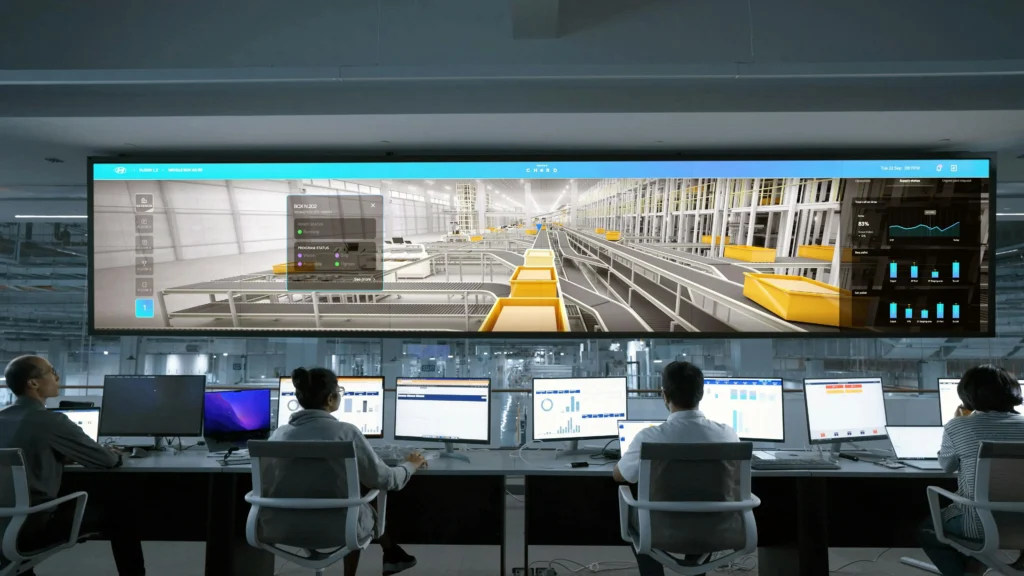
Control room ready
We integrate UAV feeds into command workflows, supporting clearer operator views, faster escalation and better incident coordination.
UAVs that operate like a system
The real value of UAV security is delivered when it’s engineered as a repeatable capability: alert → launch → verify → coordinate → resolve.
Alarm to eyes-on in seconds
When an alarm triggers, the first minutes decide everything. If teams can’t confirm what’s happening quickly, responses become slower, riskier, and more resource-heavy — especially across large or remote sites.
Autonomous “drone-in-a-box” capability closes that gap by launching immediately after a trigger and streaming live video to operators. This turns alerts into verified events faster and reduces wasted dispatches.
How Comms-Spec adds value: We design the full workflow — integrating alarms, launch rules, flight routes and operator views so verification is fast, consistent, and easy to run under pressure.
Blind spots & wide perimeters
Large sites, borders and critical infrastructure often have unavoidable blind spots. Terrain, buildings and distance create gaps that static CCTV and foot patrols can’t cover continuously.
UAV patrol routes add an aerial layer that can scan wide areas quickly, reposition in real time, and provide coverage where fixed cameras can’t reach — day or night with thermal options.
How Comms-Spec adds value: We map your site and risks, then engineer patrol patterns and response zones that reduce blind spots and improve coverage consistency — not just “more drone flights.”
Operator overload & false alarms
Security teams lose time and accuracy when they’re overwhelmed by alerts and video feeds. Too many unverified alarms lead to fatigue, slower reactions, and inconsistent decision-making.
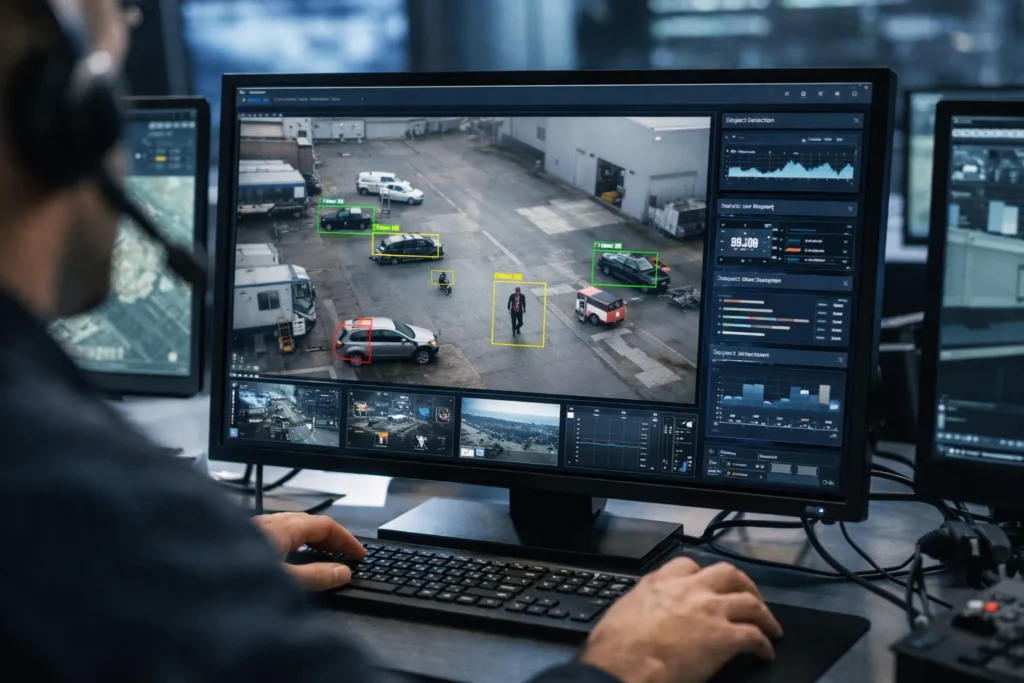
AI-assisted detection and smart event workflows help prioritise what matters — highlighting likely threats, tracking movement, and enabling faster classification so operators focus on action, not searching.
How Comms-Spec adds value: We align analytics, alert thresholds and control-room workflows to your operating model so the system supports operators instead of creating extra noise.
Secure live feeds & control
If video feeds and telemetry aren’t protected, UAV operations can become vulnerable — especially in sensitive environments where mission data and command links must remain controlled.
Secure data links and disciplined mission management protect live video and flight control, helping ensure integrity of operations and reducing exposure to interference or interception.
How Comms-Spec adds value: We design security into the end-to-end setup — from comms configuration to control procedures and integration — so UAV operations remain dependable and governed.
Detect, Analyse, Predict, Influence — built into the approach
Comms-Spec’s UAV security philosophy goes beyond hardware. By combining aerial visibility, intelligent detection and structured response workflows, UAVs become a proactive layer that helps you spot patterns, verify incidents sooner, and influence outcomes before threats escalate.
What this enables
- Faster verification and smarter escalation
- Better coverage across large or complex sites
- Clearer decision-making with fewer unknowns
Ground Control that scales from fixed to field-ready
Whether you’re operating from a fixed control room or deploying capability in the field, ground control design determines mission success. Comms-Spec supports fixed and mobile ground control station setups that enable mission planning, real-time monitoring, and rapid operational decision-making — wherever your team needs to run the mission.
Related Solutions
A UAV capability is strongest when platforms match mission needs — rapid response, wide-area patrol, long endurance, or specialist sensing. Comms-Spec supports a range of UAV platform types and configurations to meet operational requirements.

Close Protection

Commercial Marine

Events

Hotels and Luxury Properties

Natural Resource

Ports
Frequently Asked Questions
- What is UAV security?
UAV security is the use of drones as an operational layer within a wider security system—providing rapid aerial verification, wide-area patrol, and real-time intelligence. Unlike “ad-hoc drone use,” UAV security is typically designed as a repeatable workflow: alert → launch → verify → coordinate → resolve. This makes UAVs useful for reducing blind spots, improving incident response speed, and supporting safer decision-making before teams enter risk.
- How does “drone-in-a-box” security work?
A drone-in-a-box system uses an automated base station that stores, charges, and protects the UAV. When an alarm triggers (or a scheduled patrol is due), the drone can launch, fly a predefined mission, stream live video, and return to dock—ready for the next deployment.
The value is consistency: instead of relying on someone being available to deploy a drone manually, drone-in-a-box supports rapid, repeatable response and can enable 24/7 coverage with minimal operational friction. - What problems do UAVs solve that CCTV and patrols can’t?
Fixed cameras and patrol teams are essential, but they have natural limitations:
Blind spots from buildings, terrain, distance, and changing conditions
Slow verification when alarms are unconfirmed or incidents move
High resource demands when patrols must cover large perimeters continuously
UAVs add speed and flexibility: they can reposition in real time, verify alarms quickly, and provide aerial context that helps teams make better decisions with fewer unknowns.
- How fast can a UAV verify an alarm on a large site?
Speed depends on base station placement, mission design, and airspace constraints, but UAV security is commonly built around rapid verification—getting eyes on an alert far faster than dispatching ground teams to search.
The key is designing the workflow: launch rules, routes, camera views, and how live imagery reaches operators. A well-engineered setup focuses on reducing “time-to-verify,” not just flying drones. - Which UAV platform is best for security operations?
The best platform depends on the mission profile:
Surveillance UAVs for routine patrol and high-resolution monitoring
Interceptor UAVs for rapid response and dynamic tracking
Hybrid endurance UAVs for longer time on station (persistent overwatch)
SIGINT/TACINT UAVs for specialist sensing and intelligence-led tasks
Modular payload platforms when one fleet must support multiple objectives
Heavy-lift UAVs when payload transport or specialist equipment delivery is required
In practice, the strongest capability often comes from matching platforms to tasks rather than trying to force one drone to do everything.
- How is UAV security priced, and what drives total cost?
Costs typically depend on:
Platform type and payloads (thermal, specialist sensing, modular payloads)
Whether drone-in-a-box automation is required
Site size, mission frequency, and 24/7 expectations
Control room integration complexity
Training, support, maintenance, and operational governance
The most cost-effective approach is usually the simplest architecture that meets the mission, rather than over-specifying hardware.