Digital Twin Platform (3D Site Control)
A digital twin creates a real-time, interactive model of your site — allowing teams to locate assets, view live system data, and control connected systems from a single operational dashboard.
Why Digital Twinning elevates site management
Digital twinning turns disconnected systems into a single operational picture — giving you faster response, stronger control, and better long-term efficiency.
Centralised control
View and manage CCTV, access, alarms, and building systems from one platform.
Faster incident response
Immediate alerts with clear on-screen context and location.
Automation that saves time
Scheduled procedures and rule-based actions reduce manual oversight.
Better maintenance outcomes
Track servicing needs, history and performance in one place.
Improved efficiency and cost control
Reporting highlights waste, overuse and preventable spend.
Remote operations at scale
Support remote users and control centres managing multiple sites.
Connected capabilities that make the twin powerful
These capabilities expand the twin beyond “visualisation” into a day-to-day operational tool for control, compliance and efficiency.
A digital twin tailored to your site and systems
Comms-Spec delivers digital twinning as a practical operational layer — designed around your environment, workflows, and the systems you need to control.
System integration
We connect your onsite systems into one operational platform, reducing fragmentation and improving site-wide visibility.
3D site mapping
We build an interactive 3D model using floor plans and modelling so teams can operate with clarity and speed.
Automation plans
We configure automated procedures — such as timed lockdowns, routine checks or system actions — to reduce manual workload.
Alerts & thresholds
We set up event and threshold monitoring so alarms and sensor conditions are visible instantly with clear location context.
Asset management
We structure inventory, servicing schedules and maintenance records so assets are easier to locate, manage and maintain.
Remote operations
We enable cloud access for remote teams and multi-site oversight, supporting control centres and distributed operations.
Control, visibility and efficiency
Digital twinning delivers the most value when it’s engineered as a working system: integrate → visualise → automate → alert → report.
Disconnected systems
When CCTV, access control, alarms and operational sensors sit on separate tools, teams lose time switching screens and piecing together context. That slows decisions and makes incident response less consistent — especially under pressure.
A digital twin unifies systems into a single interface, allowing operators to view and control connected technologies from one platform. Instead of chasing information, teams can verify, act and coordinate with a clear operational picture.
How Comms-Spec adds value: We design integration around your real workflows — connecting the right systems, structuring dashboards, and ensuring the platform supports fast decisions rather than adding complexity.
Slow incident response
Incidents escalate when alerts are unclear, delayed, or spread across multiple systems. If operators can’t see what’s happening and where, response becomes slower and more resource-heavy.
Digital twinning consolidates alarms and thresholds into one interface, providing immediate visual and audible awareness across systems. With location context and linked system views, teams can move from alert to verification faster.
How Comms-Spec adds value: We build clear event workflows — mapping alerts to the right locations and linking them to the right controls so escalation is faster, cleaner and easier to run consistently.
Maintenance blind spots
Maintenance becomes inefficient when records are fragmented and asset status isn’t visible. Without clear servicing triggers and history, teams either over-maintain (wasting budget) or under-maintain (risking failures).
A digital twin acts as an asset management and maintenance layer, storing inventory, tracking servicing needs, and presenting maintenance history and status from one interface — with automated prompts when attention is required.
How Comms-Spec adds value: We structure the twin to support real maintenance operations — mapping assets properly, organising records logically, and setting up servicing alerts so reporting translates into action.
Manual oversight overload
Supervisors waste time on repetitive tasks — checking systems, coordinating routine actions, or managing procedures that should be consistent and scheduled. That creates inefficiency and increases the chance of human error.
Automation plans enable the platform to run programmed procedures automatically — such as locking down areas at set times, running checks, or executing repeatable routines without constant manual control.
How Comms-Spec adds value: We tailor automation to your operational reality — creating procedures that reduce workload, improve consistency, and remain easy to manage as your site and requirements evolve.
Digital Twinning is the future of site management
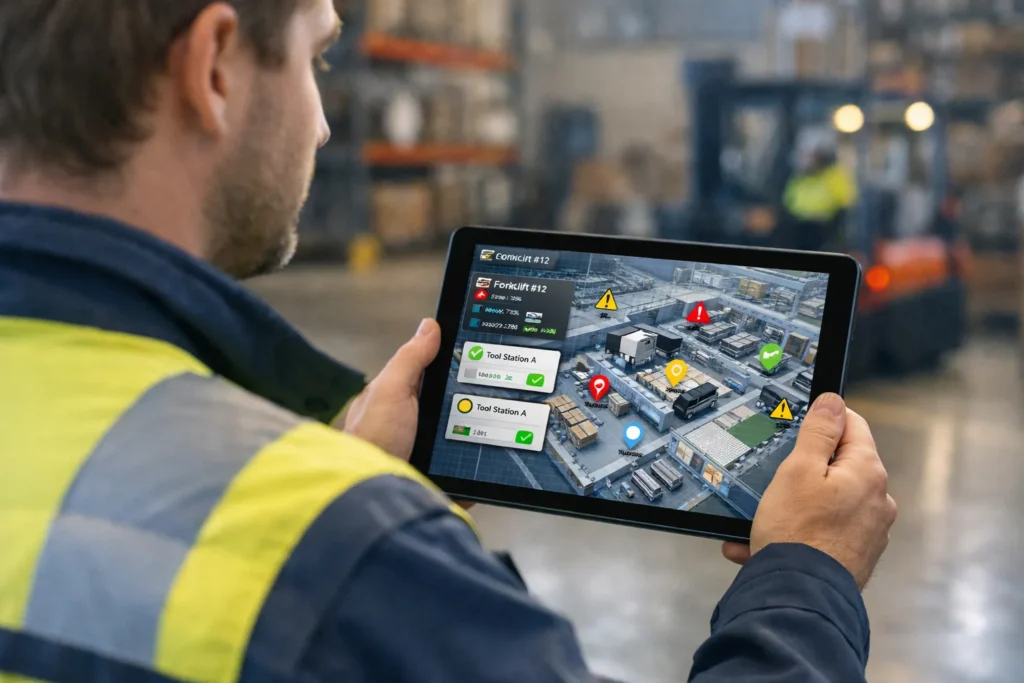
Digital twinning brings CCTV, access control, alarms, gauges and operational systems into one single interface — delivering unprecedented control and response. With a photorealistic 3D site model, teams can manage the environment from behind a screen as if they were standing next to the asset in real life.
What this unlocks
- Faster control and incident response
- Clearer oversight across complex environments
- More efficient maintenance and lifecycle management
Multi-site control from anywhere
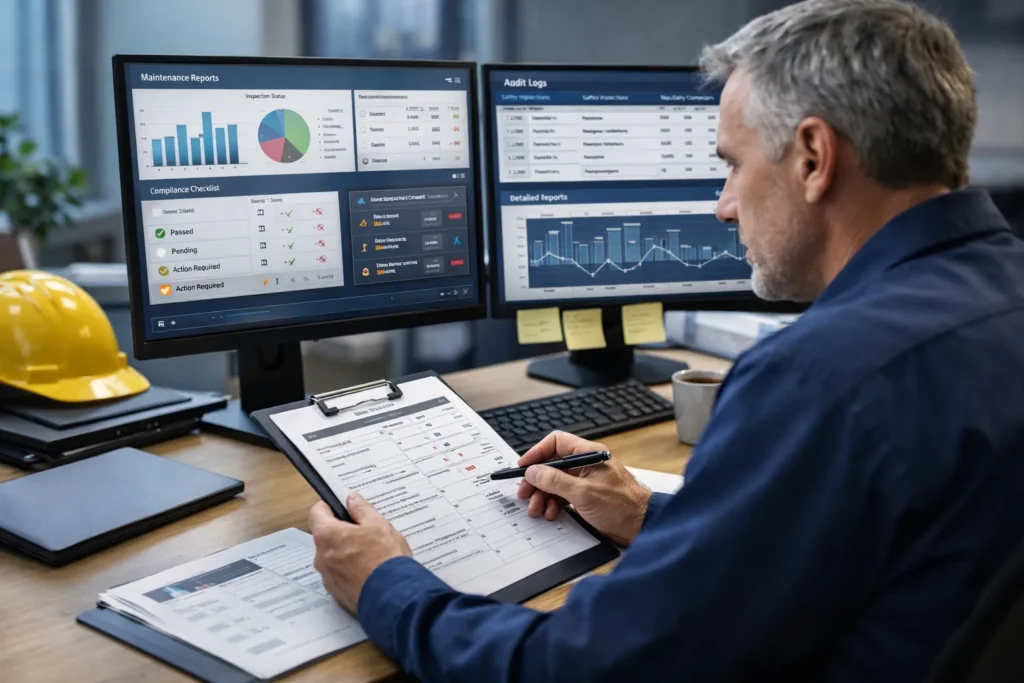
Digital twinning platforms can be accessed via laptop or tablet through the cloud, enabling remote management from anywhere in the world. For organisations with multiple facilities, the same interface can support site-by-site control and monitoring — ideal for control centres managing distributed or global operations.
Related Solutions
A digital twin creates a real-time, interactive model of your site — allowing teams to locate assets, view live system data, and control connected systems from a single operational dashboard.
Stadiums

Natural Resource

Ports

Hotels and Luxury Properties
Commercial Marine

Superyachts
Frequently Asked Questions
- What data feeds can the digital twin display and control?
A dashboard shows data. A digital twin represents the physical environment itself and the relationships between its parts. It places live data on a model or plan of your site so that operators can understand context quickly and act with confidence. Unlike a traditional SCADA or BMS that focuses on a single domain, a digital twin spans multiple domains at once. It can bring together security, safety, communications, building services and operational systems so that a single event is visible in one place with all related information attached.
- How does a digital twin improve operations day to day?
A digital twin can ingest status, alarms and video from a wide range of sources, then present them on a live map, plan or 3D view.
Security: CCTV status and streams, video analytics events, access control doors and readers, intruder alarms, perimeter sensors, ANPR.
Safety: fire panels, smoke and heat sensors, emergency and panic alarms, muster points.
Communications: radio presence and talk groups, dispatcher events, service call requests, VoIP endpoints.
Operational and IoT: power, HVAC, environmental sensors, energy meters, equipment health, occupancy and people flow.
External feeds: weather, UAV detection, vehicle scanning results, maintenance tickets.
Authorised users can acknowledge alarms, call camera presets, lock or unlock doors, trigger announcements, dispatch teams, and create incidents with attachments. Every action is permission controlled and recorded in the audit trail.
- Is the platform secure and who can access it?
We implement role based access, MFA,
network segmentation, and encryption. Access can be from the control room or
securely over VPN for authorised users. - Is the platform secure and who can access it?
It reduces time to understand a situation and time to act.
Operators see the event, the location, nearby cameras, relevant doors and recent activity on one screen.
Automated playbooks can open camera views, notify the right team, and present checklists based on incident type.
Predictive maintenance is supported by trend analysis and equipment health overlays, which helps prevent outages.
Post-incident reviews are easier because video bookmarks, operator notes and device telemetry are stored together.
Training and drills can be run inside the same view so teams practise the exact workflows they will use in live incidents.
The result is faster decisions, fewer handoffs, and clearer accountability.
- How long does implementation take?
Implementation is phased to deliver value quickly while managing risk.
Discovery and design: goals, use cases, floor plans, naming standards, data sources and user roles.
Data model and integrations: connect priority systems using open standards and vendor SDKs.
Visualisation and playbooks: build the live map or model, alarm views, and response workflows.
Pilot: a focused area proves performance and operator workflow.
Rollout: extend integrations and coverage, with training and documentation.
Support: monitoring, updates and service reporting.
A pilot can be delivered in weeks. Full rollout depends on the number of systems, sites and data points, and is typically scheduled over several weeks to a few months.
- Can it integrate with legacy equipment?
Yes. Interoperability and resilience are core design goals.
Legacy systems are bridged using open protocols such as ONVIF and OPC UA, vendor SDKs, or lightweight gateways.
Where devices cannot be controlled directly, the twin can still ingest status and alarms for situational awareness.
Edge buffering allows events and video to be cached locally during network outages and synchronised when links return.
Critical functions have defined fallbacks and can continue in a degraded but safe mode until full service is restored.
The model is version controlled so physical changes to the site are reflected quickly without breaking historical context.
Comms-Spec documents integrations, failover paths and operating procedures so teams know exactly how the system behaves in every state.