
Remote connectivity options
We supply and integrate the right combination of satellite, cellular, and cloud solutions—then configure, manage, and support them so your connectivity performs consistently in the real world.
What you gain with the right system
Designed properly, remote connectivity becomes an operational advantage—fast to deploy, resilient under pressure, and secure enough for business-critical work.
Global reach
Connect teams and assets where terrestrial networks end.
Business resilience
Maintain continuity during outages, disruptions, or site changes.
Faster deployment
Get online without waiting for fixed-line installs.
Lower overhead
Reduce reliance on on-prem hardware and physical infrastructure.
Secure access
Modern security models and controlled network access options.
Scalable growth
Add users, sites, and services without re-building the system.
Add-ons that strengthen remote connectivity
These options improve performance, resilience, and user experience—especially in difficult locations or scaled deployments.
Choose the right remote connectivity setup
The “best” setup depends on location, speed requirements, how quickly you need it, and how critical uptime and security are. Use the guide below to find the right approach fast.
Remote site with no fixed-line
Satellite broadband provides fast deployment and dependable connectivity where fibre isn’t viable—ideal for remote operations, temporary sites, and rapid mobilisation.
Global connectivity for vessels / expeditions
A global solution designed for moving operations and harsh conditions, supporting communication, navigation needs, and crew welfare.
Temporary business Wi-Fi in 24–48 hours
Business-grade 4G/5G Wi-Fi delivered quickly with industry-grade hardware—ideal for pop-up offices, events, refurbishments, and temporary projects.
Wide-area push-to-talk for distributed teams
Push-to-talk over cellular delivers “radio-style” group comms nationwide without dedicated radio infrastructure, with modern features like GPS and emergency alerts.
Global voice calling beyond terrestrial coverage
Satellite voice options provide dependable calling anywhere on Earth for continuity and safety.
Government-grade controlled network access
Managed access solutions designed for controlled, monitored connectivity in sensitive environments with central oversight.
Multi-site standardisation and remote management
Standardised builds that are easy to deploy and support across multiple locations, with configuration and monitoring to reduce downtime and inconsistency.
Performance upgrades and deployment architecture
Remote connectivity succeeds when it’s engineered around real constraints—coverage, uptime expectations, security requirements, and the reality of supporting teams at a distance.
LEO satellite broadband
In remote and mobile environments, the biggest obstacle is waiting: waiting for fibre, waiting for approvals, waiting for infrastructure that may never arrive. Meanwhile operations still need connectivity for coordination, safety, and welfare—especially where downtime has real consequences.
LEO satellite broadband solves this by delivering high-speed connectivity with low latency in places traditional solutions can’t reach. It enables real-time communications and continuity without relying on local terrestrial networks.
How Comms-Spec adds value: We integrate satellite connectivity as a complete service—hardware selection, installation planning, commissioning, and ongoing support—so the solution is dependable from day one, not “best effort internet.”
Rapid-deploy temporary connectivity
Temporary sites, refits, pop-up operations, and events often need connectivity immediately—but fixed lines are too slow, too expensive, or too disruptive. The result is teams operating on personal hotspots and unreliable workarounds.
Business-grade 4G/5G Wi-Fi solves this by delivering a reliable connection quickly with the right router hardware and service plan. It can be deployed short-term, scaled for multiple users, and removed when no longer needed.
How Comms-Spec adds value: We supply industry-grade kit, configure it to your usage profile, and ensure you get a stable setup that works “every time”—not a fragile, consumer-grade approach.
Industrial-grade hardware
Consumer routers can be fine for casual use, but they often fail when used as an operational backbone—heavy workloads, harsh conditions, long duty cycles, and the need for control and monitoring expose their limitations.
Industrial-grade connectivity hardware solves this by providing robust performance designed for continuous operation, remote support, and demanding environments—especially when reliability matters more than headline speed.
How Comms-Spec adds value: We match hardware to the environment and duty cycle, then configure and support it as a managed asset—reducing failures, downtime, and the need for ad-hoc fixes.
External antennas
In rural or signal-challenged areas, connectivity can feel “unpredictable”—fast one moment and unusable the next. Buildings, terrain, and indoor attenuation often weaken the signal your router can lock onto, creating instability that undermines productivity.
External antennas solve this by improving reception and stabilising the connection—capturing a stronger signal and feeding it into the router for more consistent performance.
How Comms-Spec adds value: We identify the real limiting factor and deploy the correct antenna strategy—type, placement, and commissioning—so improvements are measurable, not guesswork.
Satellite + cellular resilience
Even strong connectivity options can be affected by outages, congestion, or local disruptions. If your operations rely on being connected, a single point of failure becomes an operational risk.
A resilience architecture solves this by combining connectivity methods—using cellular where strong, satellite where terrestrial is unavailable, and failover strategies where continuity is non-negotiable.
How Comms-Spec adds value: We design continuity around your priorities—what must stay online, what can degrade gracefully, and how response is handled—so resilience is practical, not theoretical.
Global voice calling
When teams operate outside traditional coverage, voice communication becomes a safety and continuity issue. Messaging apps and internet calling aren’t always reliable in remote contexts—and relying on them can introduce unacceptable risk.
Satellite voice solves this by providing dependable calling anywhere, supporting command continuity and welfare communications when terrestrial options aren’t available.
How Comms-Spec adds value: We align devices and plans to your mission profile and ensure deployment is simple, supportable, and ready when needed—not “figured out during the incident.”
Global push-to-talk
The challenge with distributed operations is speed: coordination slows down when teams are spread across locations and platforms. Conventional calling is too slow for urgent coordination, and siloed tools fragment response.
PTT solves this by enabling instant group communication across wide areas, supporting rapid coordination without complex infrastructure.
How Comms-Spec adds value: We design group structures, permissions, and operational workflows so PTT is easy to use under pressure and consistent across teams and regions.
Secure controlled access
As remote operations expand, the traditional network perimeter disappears. Without controlled access, monitoring, and governance, remote connectivity becomes a security risk—especially for government or sensitive operations.
Managed secure access solves this by enabling controlled network access with central oversight, monitoring, and a more resilient posture aligned to modern security models.
How Comms-Spec adds value: We translate security intent into practical deployment—access rules, monitoring approach, user/device controls—so the solution is both secure and usable.
Cloud telephony
When business phones are tied to a building, remote work becomes fragmented: personal mobiles, missed calls, inconsistent caller experience, and limited visibility. The result is lost opportunities and reduced service standards.
Cloud telephony solves this by moving your phone system into a managed platform. Staff can take calls anywhere, keep the same number, and use modern features like call flows, groups, apps, and collaboration tools.
How Comms-Spec adds value: We design your telephony around your customer experience—call routing, IVR, out-of-hours rules, device options, and integrations—then support the system so it evolves with your business.
Operational innovation
Remote operations often stall not because the connection is impossible, but because support and troubleshooting are slow. Without visibility and structured support, minor issues become prolonged outages.
Modern managed connectivity solves this with proactive support models, remote maintenance, and tools that help teams resolve issues faster—reducing downtime and improving operational agility.
How Comms-Spec adds value: We deliver remote connectivity as a managed capability with clear ownership, monitoring, and support pathways—so performance stays consistent long after installation.
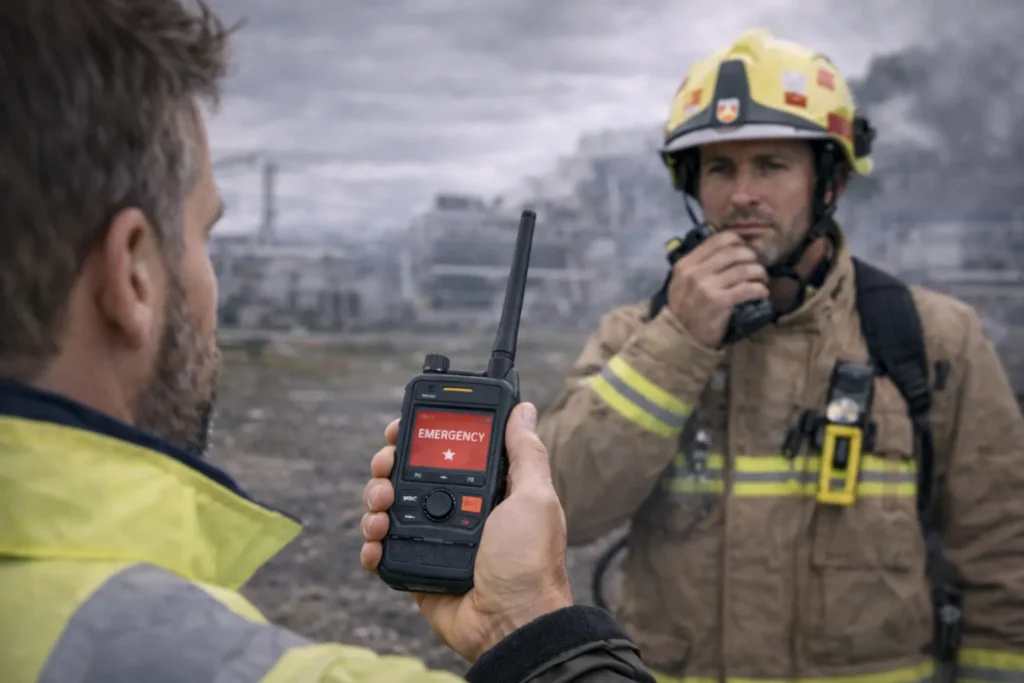
Security and continuity for remote work and remote operations
Remote connectivity should be secure by design and resilient by default—especially when it carries operational, safety, or commercially sensitive traffic.
Secure access models aligned to modern remote working realities
Stronger continuity through cloud-based services and resilient architectures
Centralised oversight for multi-site deployments
Reduced downtime through managed support and proactive maintenance
Governance-friendly approaches for sensitive and regulated environments
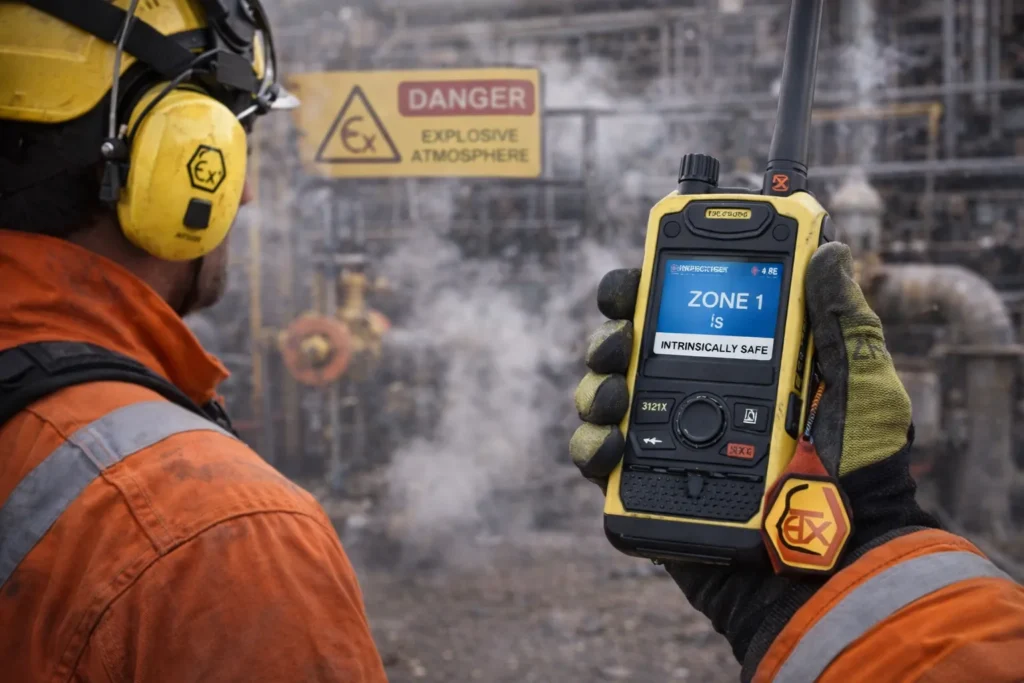
Remote connectivity is now a strategic necessity
Remote solutions are no longer optional perks—they enable global talent, improve productivity, reduce overhead, and deliver operational agility. The right connectivity platform lets you scale fast, support teams anywhere, and maintain continuity even when physical sites change or fail.
Related Solutions
We supply and integrate the right combination of satellite, cellular, and cloud solutions—then configure, manage, and support them so your connectivity performs consistently in the real world.
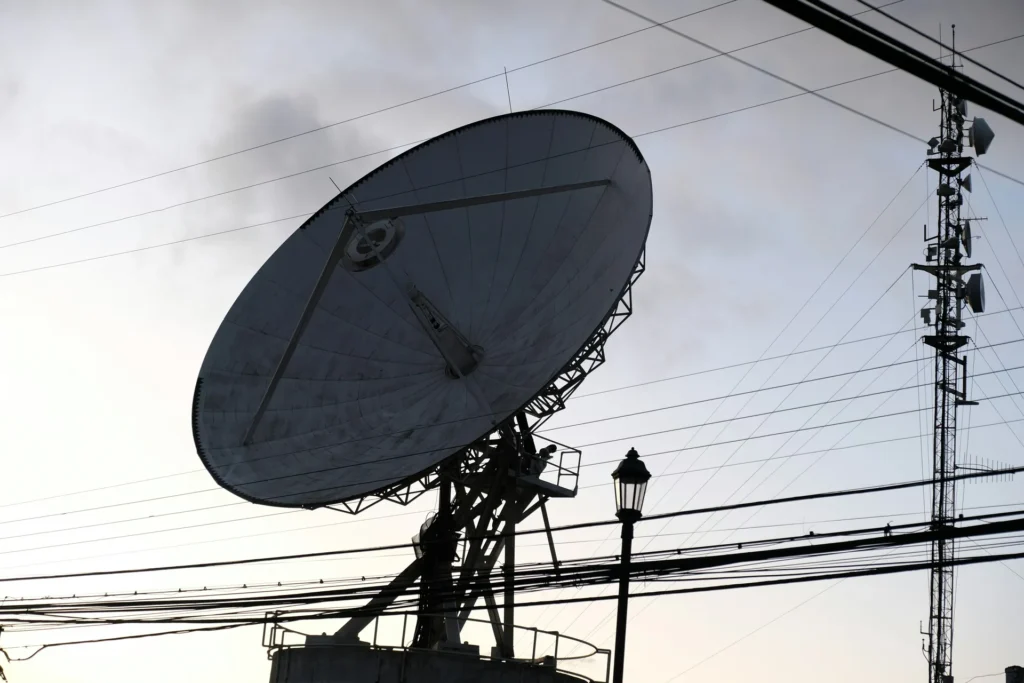
Remote Connectivity

Commercial Marine

Natural Resource

Ports

Superyachts
Frequently Asked Questions
- How do you design coverage for complex sites?
A robust system combines infrastructure, user equipment and operational processes.
Infrastructure: repeaters, combiner and duplexer networks, distributed antenna systems for buildings, leaky feeder for tunnels or ships, and site linking for wide areas.
Control and management: dispatcher consoles with mapping and recording, key management for encryption, fleet programming tools and asset tracking.
Gateways: radio over IP for wide-area linking, telephone interconnect to VoIP, and bridges to push-to-talk applications on smartphones.
User equipment: handhelds and mobiles with role-specific profiles, intrinsically safe options for hazardous areas, and marinised or high-IP-rated units for harsh environments.
Accessories: covert earpieces, noise-attenuating headsets, speaker microphones, body-worn PTTs, vehicle kits and fixed desk stations.
Procedures and training: call signs, talkgroup discipline, emergency usage, battery care and simple fault reporting.
Support: spares, firmware maintenance, health monitoring and clear service levels.
Comms-Spec designs the entire chain so talk-in and talk-out performance, safety features and workflows all align with your operation.
- Do we need licences and can you help with them?
Design starts with measured data and clear traffic assumptions.
Survey and modelling: RF site surveys, propagation modelling, test transmissions and walk or drive testing to confirm signal margins indoors and outdoors.
Coverage methods: single or voted repeaters for moderate footprints, simulcast for uniform wide areas, DAS or leaky feeder for complex interiors and vessels.
Capacity planning: call loading, grade of service targets and busy-hour traffic inform channel counts and talkgroup layout.
Conventional vs trunked: conventional channels suit smaller fleets with predictable usage; trunked systems add dynamic channel assignment and roaming for large, busy or multi-site estates.
Acceptance criteria: documented talk-in and talk-out maps, audio intelligibility scores, building penetration targets and handover performance.
We provide an acceptance test plan and only sign off once real-world results meet the agreed thresholds.
- Are the radios secure against eavesdropping?
Protection and reliability are designed in from handset to core.
Security: digital encryption options up to strong AES, authenticated key management, role-based profiles and over-the-air programming for controlled updates.
Safety features: emergency button with priority override, lone worker timers, man-down tilt detection, and location reporting where supported.
Resilience: redundant power for repeaters, surge and lightning protection, monitored links between sites, and documented fallbacks to simplex or emergency talkgroups if a repeater fails.
Environmental fitness: IP-rated housings, salt-fog and vibration tolerance for marine or industrial use, and intrinsically safe models for explosive atmospheres.
Operational assurance: recorder integration for incident review and compliance where policy allows.
Comms-Spec supplies runbooks that describe behaviour during faults so teams know exactly how to continue operating safely.
- Are the radios secure against eavesdropping?
Yes. Interoperability extends the value of the radio network.
Dispatcher integration: live maps, call queuing, emergency alerts, call recording and patching between talkgroups.
Push-to-talk over cellular: extends radio talkgroups to smartphones and tablets for supervisors, remote engineers or contractors.
Telephony and PA: telephone interconnect so desk phones can reach talkgroups, and interfaces to public address for site-wide announcements.
Security platforms: linkage to incident, service call and digital twin systems so emergency presses create tasks, cue cameras and show on the live map.
APIs and logs: export of call and alarm data to reporting tools for performance metrics and compliance.
This single operating picture reduces handoffs and speeds incident response.
- Can radios interoperate with smartphones and control rooms?
Regulatory and spectrum planning are part of the service.
Licensing: Comms-Spec arranges national licences and temporary event licences as needed, and documents frequency allocations and permitted powers.
Interference control: channel plans with proper spacing, CTCSS or colour codes, filtering and combiners, and on-site monitoring during commissioning to identify local emitters.
Antenna systems: isolation, grounding and quality cabling to protect receiver performance and minimise desense.
International use: country-specific programming profiles, paperwork for customs and spectrum authority notifications, and guidance for travelling teams.
Change control: documented processes for adding channels or sites without disrupting existing service.
These steps protect audio quality and legal compliance across the life of the system.
- What about battery life and ruggedness?
A structured lifecycle keeps the fleet reliable and easy to manage.
Pilot and rollout: a pilot confirms coverage and talkgroup design, followed by phased deployment with clear user communications.
Programming and labelling: device templates, asset tags, channel cards and laminated quick guides reduce errors.
Training: role-based sessions on radio discipline, emergency features, headset use and basic troubleshooting.
Battery strategy: shift-length planning, multi-bay chargers, spare pools, periodic capacity testing and replacement schedules.
Monitoring and maintenance: firmware updates, alignment checks, health dashboards for repeater status and call loading, and scheduled service visits.
Spares and swap stock: preconfigured handsets, microphones, batteries and chargers ready for rapid replacement.
Service levels and reporting: response times, uptime targets, usage and incident reports, and quarterly reviews to tune talkgroups, coverage and capacity.
Short-term needs: rental fleets and temporary repeaters for projects or events, with installation and removal planned to minimise disruption.
Comms-Spec remains your single point of contact for support, expansion and upgrades so the system evolves with your operation.