
AI-Powered CCTV Surveillance
AI-enabled CCTV shifts surveillance from passive recording to proactive, real-time intelligence — helping teams detect, classify and respond faster.
Why CCTV & Surveillance is more valuable when it’s integrated
The real value isn’t just having cameras — it’s how quickly you can detect, confirm, and respond with confidence.
Enhanced security and deterrence
Integrated actions (alerts, recording, locks) create a stronger defence.
Instant visual verification
Alarms can trigger cameras to focus on the right zone immediately.
Better operational efficiency
One interface, fewer steps, clearer workflows for operators.
Reduced false alarms
Verify before responding, helping reduce unnecessary deployments and fines.
Clear evidence and investigation
Video plus timestamps and access logs supports stronger incident evidence.
Remote monitoring and peace of mind
Monitor sites from anywhere via mobile devices and connected comms.
LiDAR Surveillance for precision, privacy and poor conditions
LiDAR provides high-precision 3D detection that performs in conditions where cameras struggle. It’s ideal for environments needing reliable detection, minimal false alarms, and privacy-preserving monitoring.
Designed for faster verification and response
Comms-Spec builds CCTV and surveillance as an operational system — integrating detection, verification and communications so teams can act quickly and confidently.
Reduce false alarms
We use AI classification and verification workflows so operators aren’t reacting to weather, wildlife or harmless movement.
Instant verification
We connect alarms and sensors to surveillance so cameras focus on the right zone immediately for live confirmation.
One dashboard
We integrate CCTV, access control, intruder alarms and safety systems into a single operational platform to remove friction and delays.
Remote oversight
We enable secure remote monitoring via mobile and connected comms so decision-makers stay informed without being onsite.
Site-wide coverage
We design camera placement and LiDAR zones around real site behaviour, blind spots and high-risk routes — not generic layouts.
Smarter escalation
We connect surveillance to Hybrid Radio and incident workflows so the right people get the right information at the right time.
Surveillance that behaves like a system
Better outcomes come from structured workflows: detect → verify → alert → respond → evidence.
False alarms & fatigue
If alarms trigger constantly, teams stop trusting them. That leads to slower responses, wasted deployments, and the risk of missing the incident that actually matters.
AI video analytics reduces false positives by classifying what caused the alert — distinguishing people and vehicles from rain, shadows, trees and wildlife — so operators only focus on actionable events.
How Comms-Spec adds value: We tune analytics to your environment and risk model, then structure verification workflows so alerts are cleaner, operator workload drops, and response becomes faster and more consistent.
Disconnected security tools
When CCTV, access control and alarms sit on separate systems, operators waste time switching interfaces and piecing together context. That delay can turn a preventable incident into a costly one.
An integrated surveillance platform centralises monitoring and links events together. Alarms can trigger cameras, access events can be matched to video, and teams can verify incidents immediately from one dashboard.
How Comms-Spec adds value: We integrate the components into a joined-up operating picture — designing event rules, dashboards and workflows that reduce friction and speed up decision-making under pressure.
Low light & bad weather
Standard cameras can struggle at night, in glare, or during fog and heavy rain. When image quality drops, confidence drops — and security teams are forced back into guesswork.
LiDAR adds reliable 3D detection that operates in darkness and performs strongly in harsh conditions. It can track movement and create virtual perimeters with fewer nuisance alarms.
How Comms-Spec adds value: We deploy the right blend of CCTV and LiDAR for your conditions, then commission detection zones and camera handoffs so performance stays dependable in the situations where you need it most.
Privacy in public spaces
In public-facing environments, surveillance can raise privacy concerns — especially where identifying individuals isn’t necessary for safety and security.
LiDAR supports privacy-preserving monitoring by detecting people as anonymous moving objects rather than capturing detailed imagery. It can still track movement, direction and speed for reliable incident detection.
How Comms-Spec adds value: We design surveillance that matches your compliance and environment — using LiDAR where privacy matters, and integrating it with your wider security workflow for effective monitoring without over-collection.
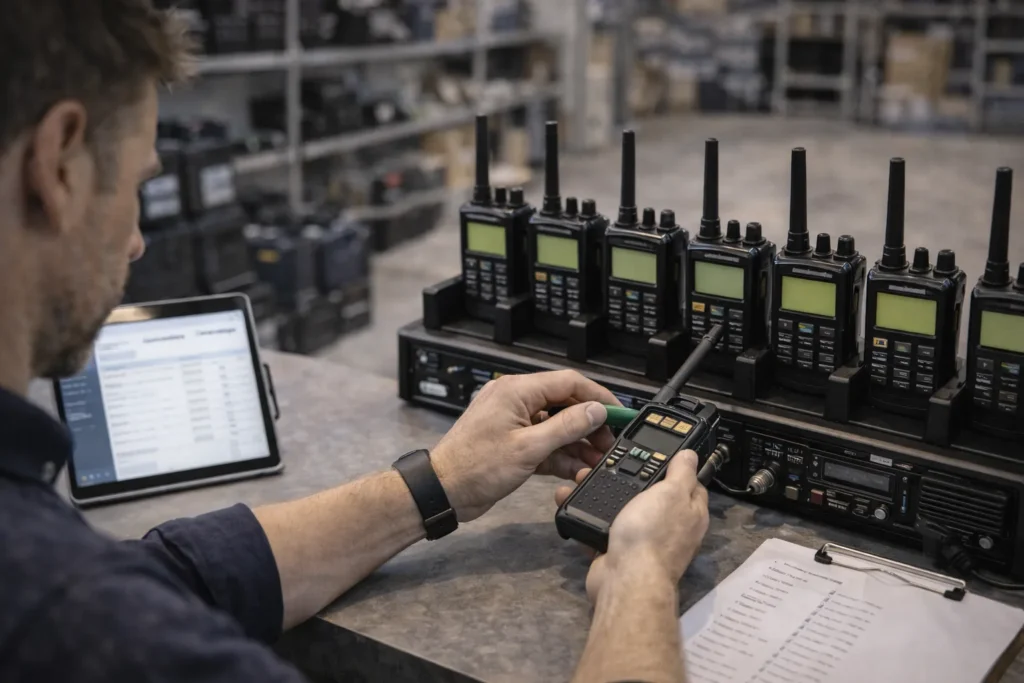
Hybrid Radio integration that speeds up response
Seeing the incident is only half the battle — response teams need the information immediately. By integrating surveillance with Hybrid Radio, alerts and incident context can reach teams in real time, improving coordination and reducing time-to-intervene.
What this enables
- Instant notifications to the right teams
- Better situational awareness beyond the control room
- Faster escalation with clearer incident context
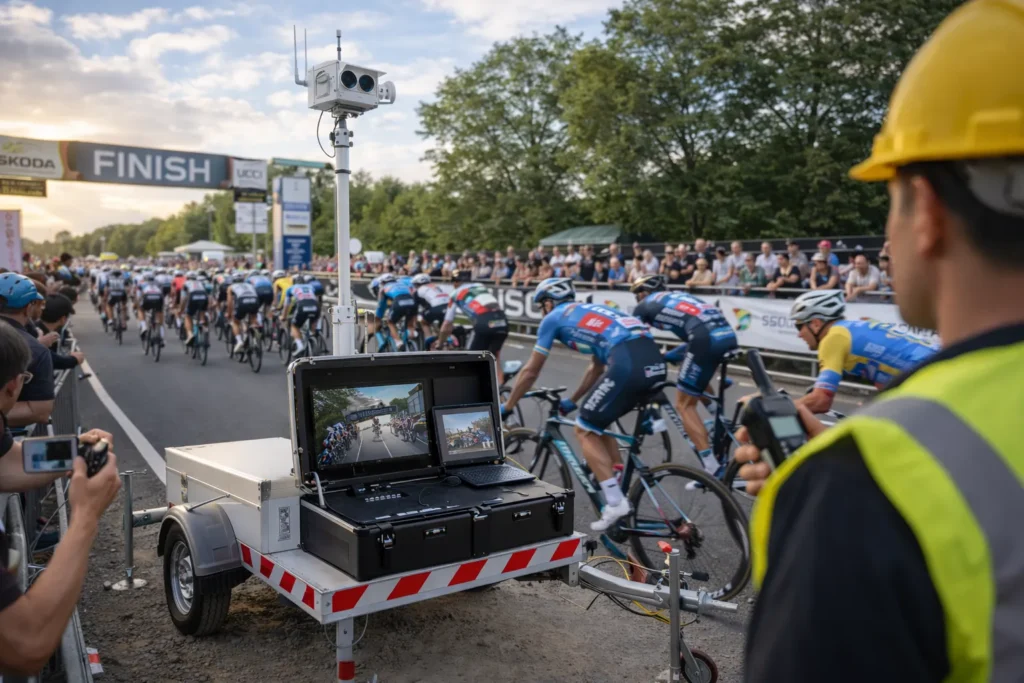
Pop-up CCTV for temporary surveillance
Events and temporary sites change fast — and fixed camera infrastructure isn’t always available, practical, or in the right place. Pop-up CCTV gives you rapid-deploy surveillance that can be installed where risk is highest, then moved as crowd flow, access points and operational priorities shift.
Comms-Spec designs and deploys temporary CCTV solutions that integrate into your wider security and comms setup, so operators can verify incidents quickly, reduce blind spots, and coordinate response teams with live visual context.
Related Solutions
AI-enabled CCTV shifts surveillance from passive recording to proactive, real-time intelligence — helping teams detect, classify and respond faster.

Events

Stadiums

Natural Resource

Ports

Hotels and Luxury Properties

Commercial Marine

Close Protection

Superyachts
Frequently Asked Questions
- Which camera types do you supply and where are they used?
Choosing the right mix of cameras is key to effective coverage.
Fixed dome or turret for general indoor areas, lobbies, corridors, and reception.
Bullet for outdoor perimeters where longer lenses and visible deterrent value help.
PTZ for large spaces that need steerable zoom, such as yards or arenas.
Multisensor or panoramic for wide coverage with fewer mounting points.
Low-light or starlight sensors for dim environments without adding visible lighting.
Thermal for detection in total darkness, fog, or where privacy masking is required.
ANPR for vehicle entrances and traffic lanes.
Hazard-rated housings where dust, salt, vibration, or chemicals are present.
Comms-Spec designs placement and field of view based on risk, lighting, height, and mounting constraints. We set target identification objectives such as detect, observe, recognise, and identify, then select lenses and positions to meet those objectives.
- How long can we keep recorded video and how is it stored?
Image quality depends on sensor, lens, compression, and scene conditions.
Resolution and frame rate are selected per location. Critical points may use 4K at higher frame rates, while general areas use 1080p with adaptive rates.
Wide dynamic range manages backlighting and glare at entrances.
Bitrate and codecs such as H.265 with smart encoding keep storage efficient without losing detail.
Lens choice and focus ensure faces, number plates, and tools are captured at the right pixel density.
Motion and low light are handled with appropriate shutter speeds, IR illumination, or thermal imaging to avoid blur and noise.
We validate scenes during commissioning, then fine tune exposure, focus, and compression to meet evidential standards.
- Can the system detect events automatically?
Recording is designed around your retention policy and risk profile.
On-premises NVR or VMS for local control, with RAID storage and server redundancy where required.
Cloud or hybrid recording for elastic retention or multi-site aggregation.
Continuous, motion, or analytics-driven recording to balance evidence needs with storage efficiency.
Failover and edge storage so cameras buffer locally during network outages, then back-fill when links recover.
Export and chain of custody with watermarked clips, hash verification, and incident notebooks.
Comms-Spec sizes storage for the agreed retention window and provides clear calculators and reports so capacity remains on track.
- Can the system detect events automatically?
Yes. Analytics and integrations turn cameras into proactive sensors.
Video analytics for line crossing, intrusion, loitering, object left or removed, crowding, smoke or flame detection, and tamper detection.
Alert routing to the control room, radios, or mobile devices with snapshots and live links.
Event workflows that call PTZ presets, bookmark video, or lock and unlock doors.
Integrations with access control, intruder alarms, service call platforms, ANPR, UAV monitoring, and dispatcher software so a single incident triggers the right responses.
We tune detection zones and schedules to reduce false alarms and prioritise genuine events.
- How do you ensure good performance in low light or harsh weather?
Privacy and security are designed in from the start.
Privacy masking for sensitive areas, with role-based permissions to control who can view or export footage.
Retention and access policies aligned with your data protection requirements, with full audit logs.
Secure configuration using unique credentials, TLS encryption, and network segregation for camera VLANs and management planes.
Hardened devices with firmware management, signed updates, and removal of unused services.
Clear signage and documentation including DPIAs where required, plus operator guidance on appropriate use.
Comms-Spec provides security baselines and change control so the system remains compliant over its life.
- What about privacy and compliance?
Reliability comes from robust design and proactive care.
Power and network resilience through PoE switches on UPS, redundant links where critical, and environmental protection for outdoor sites.
Health monitoring for camera heartbeat, storage status, temperature, and recording quality, with automated alerts.
Planned maintenance for lens cleaning, focus checks, firmware updates, and revalidation after layout or lighting changes.
Service levels and spares so faults are triaged quickly and key hardware is replaced without delay.
Training and handover for operators and administrators, with runbooks, escalation paths, and incident reporting templates.
Comms-Spec remains on hand with remote diagnostics, on-site engineering, and periodic system reviews to keep performance consistent and predictable.