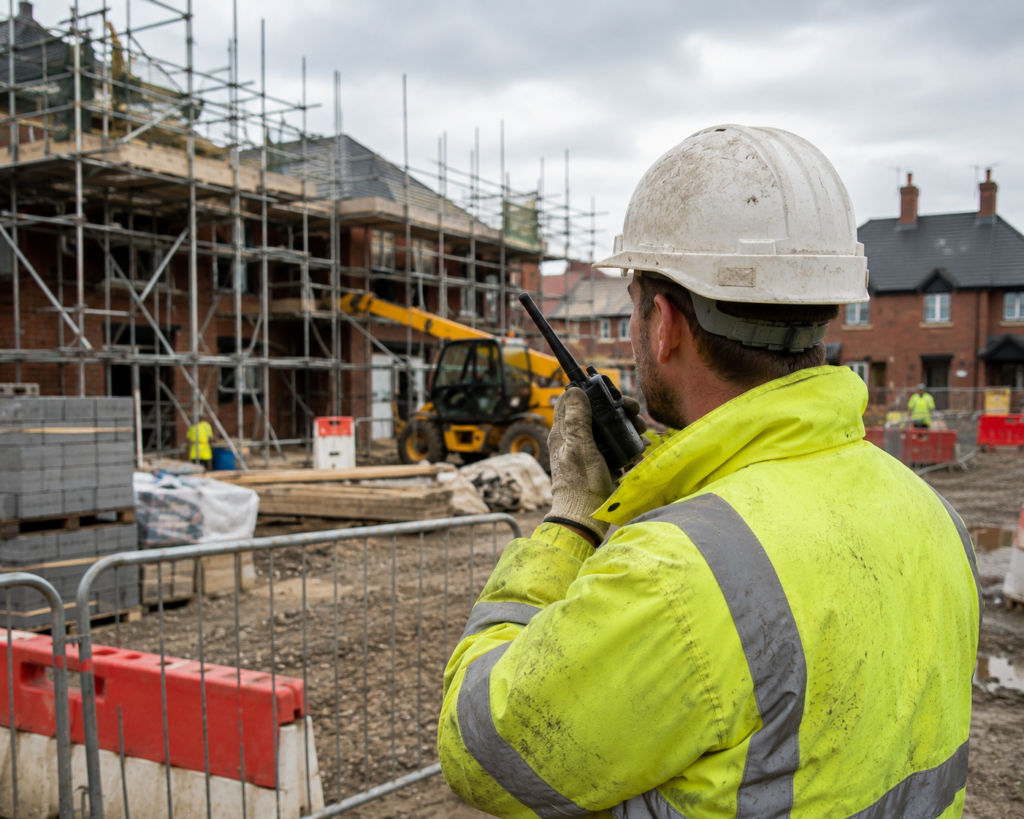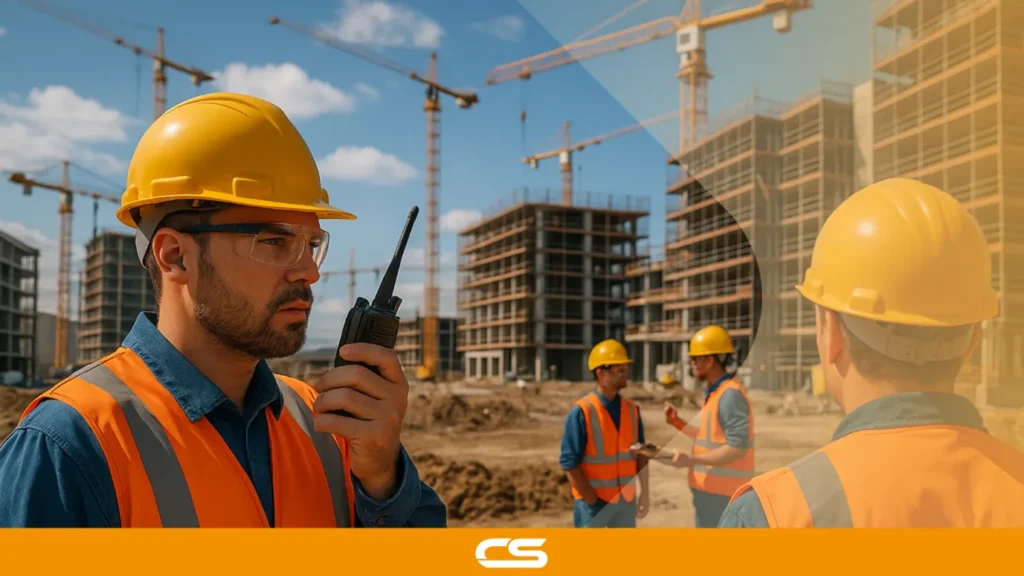
Teams don’t fail because people won’t talk; they fail because people can’t be heard. In venues, on construction sites, at sea or across sprawling logistics hubs, seconds lost to muffled audio, dead batteries or locked-down channels quickly turn into missed service levels and safety risks. This guide cuts through the spec-sheet fog and pinpoints the top features of two-way radios that genuinely improve outcomes. If you’re short on time: prioritise clear audio, long battery life, ruggedness, coverage and safety functions, and make sure they’re easy to manage at scale.
This article focuses on two-way radio features that deliver measurable value in operations, with practical selection tips for communication professionals and operations leaders. We’ll name the essential radio features you should demand in modern two-way radios, show where they pay off, and share simple tests you can run before you buy.
Why Two-way radio matters
The radio on a belt is more than hardware; it’s a live touchpoint for your brand promise. Fast responses, calm coordination and safe outcomes are what your audiences remember: customers at an arena, guests on a superyacht, passengers in a terminal, patients on a ward, or crews offshore. Choosing communication device features wisely is, therefore a strategic decision, not just a procurement line item.
Three trends make this a now-issue:
- Rising noise floors. Denser venues, bigger machines and busier roads raise ambient noise. If radios can’t punch through, service quality drops even with extra staffing.
- Fragmented estates. Many organisations run mixed fleets (analogue + digital, rental + owned, multiple brands). Interoperability and fleet management are no longer “nice to have”.
- Duty of care. Lone working, emergency response and incident documentation now carry board-level scrutiny. Features that verify who heard what, where and when are indispensable.
If your messaging leans on reliability, safety and service excellence, then the features below are your operational truth serum.
The top 10 Two-way Radio Features
We’ve grouped each capability into: What it is, Why it matters, Field example, What good looks like, and Quick checks. These are the best features of two-way radios for most sectors.
1) Instant push-to-talk with low call set-up latency
What it is: The core function, press, speak, everyone on the talkgroup hears you. Latency is the delay between pressing the PTT and being heard.
Why it matters: Delays cause cross-talk, double-keying and missed instructions. In time-critical environments, 300–500 ms of extra delay can be the difference between calm control and chaos.
Field example: A stage manager cues lighting, sound and security. If PTT takes a second to open, cues stack and teams improvise, never ideal mid-show.
What good looks like: Snappy, consistent key-up across the whole site; priority interrupt so control can break through; tactile, glove-friendly PTT; side-mounted and accessory PTT options.
2) Loud, clear audio with intelligent noise cancellation
What it is: High-output speakers, tuned audio paths and DSP/AI algorithms that suppress background noise without “eating” the voice.
Why it matters: The point of a radio is to be understood first time. Poor intelligibility doubles airtime and frustrates teams.
Field example: Ground crew on an apron stand by a running APU. With adaptive noise suppression and acoustic feedback management, calls stay crisp and fatigue is reduced.
What good looks like: 1–2 W audio output with a clean profile; automatic gain control to keep voices level; wind noise mitigation; compatible hearing-safe headsets for high-dB zones.
3) Long battery life and smart power management
What it is: Efficient radios with high-capacity Li-ion packs, smart chargers and features that reduce power draw.
Why it matters: Dead radios equal dead comms. Swapping batteries mid-shift breaks flow and increases loss/theft.
Field example: Hospitality teams run 12-hour shifts over an event weekend. Hot-swappable battery designs and fleet chargers keep everyone on-air without over-buying spares.
What good looks like: Real 12–18 hours at your duty cycle (not just a brochure claim); USB-C PD options for top-ups; fuel-gauge batteries that report health; low-voltage cut-off to protect cells.
4) Rugged durability: IP and MIL-STD ratings that mean something
What it is: Environmental resistance to dust and water (IP ratings) and mechanical resilience (drop/shock, MIL-STD-810).
Why it matters: Radios are dropped, rained on and knocked. Failure rates balloon when devices don’t match the environment.
Field example: Port operations face salt spray and constant knocks. Radios with IP67/68 ingress protection and sealed accessory pins remain serviceable longer.
What good looks like: IP67 minimum for outdoor work; proven drop tests at 1.5–2 m; textured, non-slip housings; protected screens; locking accessory connectors that don’t work loose.
5) Reliable range and coverage (RF design > headline “miles”)
What it is: The effective area where speech remains intelligible. Driven by frequency band (VHF/UHF), antenna efficiency, receiver sensitivity, site layout and repeaters.
Why it matters: Coverage gaps force unsafe workarounds, mobile phones, runners, hand signals.
Field example: Multi-storey car parks swallow RF. A well-designed UHF system with distributed antennas and, if needed, repeaters/BDAs (bi-directional amplifiers) restores consistent comms.
What good looks like: A documented coverage plan; realistic indoor tests; antennas that aren’t an afterthought; options for roaming between sites; support for simplex and repeater modes.
6) Security and privacy: encryption, authentication and access control
What it is: Voice/data encryption (e.g., AES), radio authentication, stun/kill, PIN lock, and over-the-air key management.
Why it matters: Eavesdropping risks confidentiality and can expose your people in sensitive operations. Stolen radios shouldn’t grant access.
Field example: A retail security team coordinates with local police. With end-to-end encryption and unique talkgroup keys, only authorised sets can listen or transmit.
What good looks like: AES-256 (or your compliance standard) with OTAR/OTAP for key distribution; lost-radio disable; user profiles with least-privilege talkgroup access; event logs for audits.
7) Interoperability and scalability: standards, trunking and migration
What it is: Compatibility with analogue and digital modes (e.g., DMR Tier II/III, P25, TETRA), plus the ability to scale channels/talkgroups as you grow.
Why it matters: Most estates evolve. You need to talk across departments, contractors and mutual-aid partners without rewiring everything.
Field example: A stadium brings in outside riggers with different radios. With standards-based digital and a couple of gateway/patch channels, everyone communicates safely.
What good looks like: Dual-mode analogue/digital; trunked options for busy sites; cross-patch to other bands if required; simple programming for temporary talkgroups.
8) Location services and telemetry
What it is: GPS/GNSS outdoors, plus BLE beacons or Wi-Fi for indoor positioning. Telemetry for alarms, sensors and simple data messages.
Why it matters: If something goes wrong, location cuts response time. For routine work, location makes coordination smoother and provides after-action evidence.
Field example: Lone engineers in a utility tunnel network. Indoor beacons plus man-down alerts provide precise last-known location to control.
What good looks like: Fast time-to-first-fix outdoors; reliable room- or zone-level accuracy indoors; privacy controls; geofencing for automatic channel changes or alerts; basic text/status messaging.
9) Safety features for lone workers and emergencies
What it is: Dedicated emergency button, man-down (tilt + motion), lone worker timers, all-call/priority interrupt, and recorded audio for incident review.
Why it matters: Radios are often the first and only safety system staff carry. Features must be simple under pressure.
Field example: Housekeeping finds an aggressive guest; a single press sends emergency + live location to control and nearby colleagues, with priority override.
What good looks like: Oversised, protected emergency button; customisable debounce to avoid false alarms; clear tones and haptics confirming alert; call recording at base for evidence; integration to site alarms.
10) Fleet management, over-the-air programming and analytics
What it is: Centralised tools for programming channels, updating firmware, changing settings over the air (OTAP/OTAR) and viewing device health and usage analytics.
Why it matters: The hidden cost of radios is managing them, chasing sets, updating one by one, guessing battery health. At scale this becomes unmanageable without proper tooling.
Field example: A resort with 300 radios pushes a new talkgroup map before a festival. No workshop visits; changes go live during a quiet window.
What good looks like: Role-based admin; bulk templates; audit trails; battery and accessory tracking; geo-tagged incident logs; change control with safe rollback.
A simple framework: R.A.D.I.O. FIT
Use this nine-point checklist to align essential features for modern communication radios with your operational goals. Score each 1–5.
- Range & RF design: coverage where it counts (indoors and out)
- Audio clarity: loudness, intelligibility, noise suppression
- Durability: IP/MIL-STD, drop resistance, reliable accessories
- Instant PTT: latency, priority interrupt, consistent key-up
- Operations safety: emergency, man-down, lone worker
- Fleet management: OTAP/OTAR, analytics, battery health
- Interoperability: standards, trunking, migration path
- Telemetry & tracking: GPS/indoor location, data/status messaging
Anything that doesn’t score at least 3 in every category is a risk. Anything that scores 5 should be a proof-point in your internal comms and training.
Buying and deployment tips from the field
- Write scenarios, not just specs. “Engineer in basement plant room calls control during an alarm” beats “must have GPS”. Scenarios force vendors to show, not tell.
- Prove coverage with people, not just maps. Bodies absorb RF. A live walk-test with your team is worth ten brochures.
- Budget for the ecosystem. Earpieces, speaker mics, chargers, cases and spares often cost more than the radio over its life. Choose a platform with widely available, rugged accessories.
- Close the management loop. Decide who owns programming, keys and firmware. If you outsource, document SLAs for turnaround, lost-radio actions and audit reporting.
- Train for the bad day. Run quarterly drills: emergency button, man-down, site evacuation. Capture lessons and update templates.
- Integrate where it counts. Radios can trigger doors, alarms or ticketing updates. Start with one integration that removes a manual step and build from there.
- Plan for growth. If your season expands or you add venues, can your system add repeaters, talkgroups and users without a rebuild?
For complex estates or multi-site events, our Remote Connectivity page explains how to extend coverage quickly and securely.
Conclusion and next step
Modern operations need more than a radio that powers on; they need a system that’s clear, reliable, secure and simple to manage. Focus on the ten essentials above, test them in your reality, and document how each supports your brand promise of safety and service. Tell us about your site, shifts and peak scenarios, and we’ll design a proof-of-concept that mirrors your reality—walk-tests, noise trials, and a clear rollout plan. Contact Comms-spec and let’s build a reliable, scalable two-way radio estate that keeps your teams safe and responsive.