UNODC Global Maritime Crime Programme

Comms-Spec facilitating the digital transformation program for the entire Pacific

The Mission

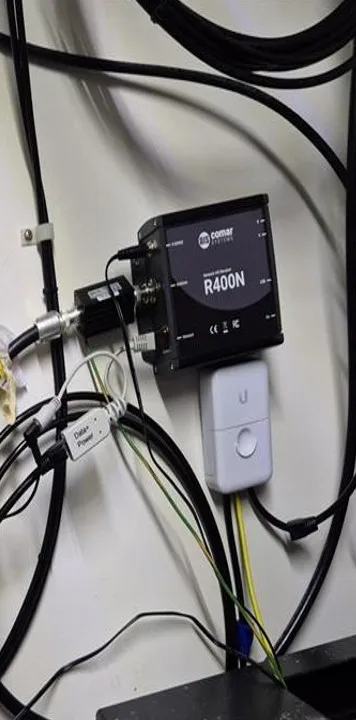
The Pacific is vast; infrastructure is not. Many remote islands have limited visibility into vessel movements beyond line of sight, which complicates everything from search-and-rescue to interdiction operations. UNODC’s Global Maritime Crime Programme engaged Communications Specialist Ltd (Comms-Spec) to deploy shore-based AIS stations—robust, terrestrial VHF receivers and antennas that capture static, dynamic, and voyage data from transiting vessels and feed that information back to national maritime authorities.

The goal: transform a patchwork of local observation into actionable maritime domain awareness.

Comm Spec Guy

“When the mount didn’t exist, we built it. When the only flight was leaving, we made it wait. The brief was simple: get the AIS online—no excuses.”

— Felix Adebayo, Comms-Spec Field Engineer

Miles Flown
61 474 KM
Miles Sailed
2 733 KM
Project Duration
1 Year
Sites Installed
33
Operators Trained
38

Where We Delivered

We deployed systems across 23 islands in eight nations throughout the North and South Pacific (Palau, Majuro, Pohnpei, Kiribati, Tuvalu, Tonga, Fiji, and Vanuatu).

The Solution We Rolled Out

COMAR SystemRemote Connectivity
Architecture at a glance
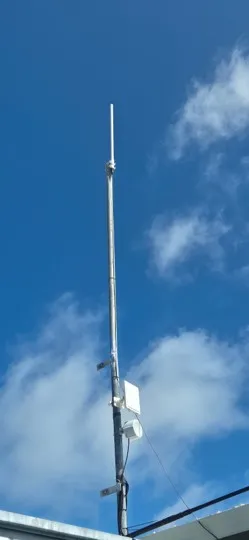
Each site pairs a high-gain antenna and an AIS base-station receiver with secure IP backhaul into a centralised view for operators. The system captures and displays static (MMSI, call sign), dynamic (position, speed, heading), and voyage (destination, ETA) data, enabling authorities to see what’s moving, where, and how fast.

We selected components for ruggedness, maintainability, and simplicity, given salt air, heat, and distance from spares.
Get Started
Personnel Training
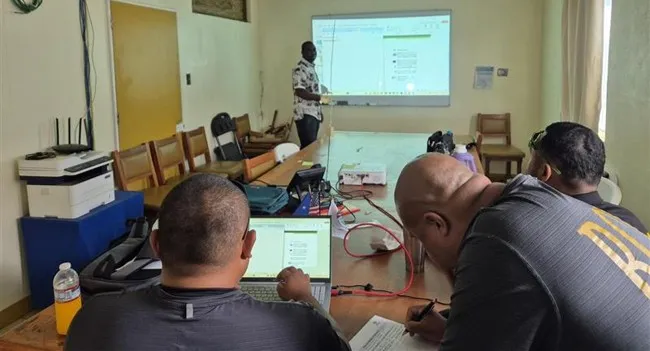
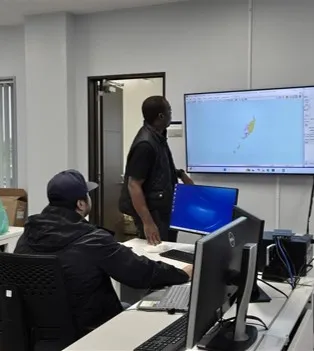
Comms-Spec delivered hands-on, on-equipment training that left local teams confident and self-sufficient for the 02:00 call. Operators learned the AIS interface, how to read static, dynamic, and voyage data, and how to turn it into clear reports and shift handovers.

Training utilised real-world scenarios with console drills and fault injection to trace the signal path and practice first-line troubleshooting using simple checklists and clear escalation paths. We establish daily and weekly maintenance routines, logbooks, and conduct grounding and weatherproofing checks.

The same engineers provide 24/7 remote support, allowing early questions to become fast and confident fixes.
Get Started
Satellite DetectionComm Spec Planning

Constraints We Met

Missing mounts
Many sites had no suitable structures. We fabricated masts on site, set height and separation, grounded correctly, and got antennas into clean air.
Long sea transits
Reaching islands often meant multi-hour boat rides. Teams staged gear, protected kit from spray, and sequenced work to make every landing count.
Irregular flights
With limited schedules, a missed flight could mean a week lost. We planned tight windows, pre-staged tasks, and in one case held an aircraft briefly to finish commissioning.
Courier bottlenecks
Some routes had a single carrier and slow onward legs. Critical spares traveled with the team and tasks were resequenced when shipments lagged.
Power stability
Voltage dips and outages threatened uptime. We installed UPS, verified grounding, and documented start-up and shut-down routines for local staff.
Food and accommodation constraints
Some sites had limited or no food shops. Engineers had to skip meals or rely on snacks, affecting energy and focus.
Weather windows
Rough seas and sudden squalls closed routes without warning. Crews used flexible task lists so progress continued even when lifts were delayed.
Limited local materials
When specific hardware was unavailable, we built or adapted safe equivalents and recorded the configuration for future maintenance.
Access and coordination
Multiple stakeholders, permits, and site keys needed alignment. Daily comms rhythms and clear checklists kept everyone moving together.

What Changed For The Client

Operational visibility
Authorities can now see vessel movements near coastal approaches and island perimeters, flag anomalies, and coordinate responses with neighboring agencies.

Faster detection means faster tasking—which, in island contexts, often means getting scarce resources to the right place at the right time.
Confidence and Capability Transfer
We measure success not by how many times we fly back but by how rarely we need to. Local operators now handle first-line checks, escalate with clear context, and keep routine issues routine.

Training was deliberately practical and scenario-based, backed by quick-reference guides and our remote team.
Resilience Built In
Pre-installation surveys and early confirmation of mounts and static IPs reduced rework and sped commissioning.

Where infrastructure was thin, we left behind documented, simple workflows that work on a bad day as well as a good one.
Contact Us