Tactical Equipment & Gear (Loadout Essentials)
From belts and carriers to packs and protective accessories, Comms-Spec supports the core kit that helps teams move, carry, protect and operate effectively.
Why Tactical & Medical capability matters
This isn’t about having more kit — it’s about having the right equipment that reduces risk, improves readiness, and supports teams when conditions go sideways.
Better team protection
Reduce injury risk with the right protective and mission equipment.
Faster response under pressure
Access critical tools and medical supplies immediately when needed.
Higher operational readiness
Build consistent loadouts across teams and roles.
More comfort, less fatigue
Mission clothing designed for weather, movement and long shifts.
Improved duty efficiency
Practical carry systems reduce time wasted searching or improvising.
Stronger professionalism and trust
Compliant, robust equipment that stands up to scrutiny and real use.
Medical, Rescue & Protective Essentials
Medical and rescue readiness saves time when seconds matter. These categories support immediate care, rapid extraction and safer operations.
Sourced and specified for real operations
Comms-Spec doesn’t just “sell kit.” We help teams build capability that matches risk, climate and mission — with practical procurement, consistent specification and role-based loadouts.
Head-to-toe loadouts
We help you build coherent kit lists across clothing, protection, medical and mission tools so teams have what they need without duplication.
Harsh climates
We source equipment proven for difficult weather and demanding environments — improving comfort, endurance and reliability.
Role-based spec
We align equipment to roles and tasks (patrol, response, public-facing, remote) so capability matches operational need.
Medical readiness
We support complete kit builds from IFAKs to extraction gear — enabling consistent response and faster access under pressure.
Pro kit sourcing
We procure from high-end suppliers globally, helping you access trusted equipment without the noise of consumer options.
Training support
Where required, we support training packages that help teams use equipment safely and consistently in the field.
Capability, not random kit
Tactical and medical equipment delivers value when it’s built into a usable system: right kit, right place, right people, right conditions.
Loadout gaps & overload
Teams often end up with a mix of incompatible items — either missing critical essentials or carrying too much. That creates slow access, discomfort, inconsistent standards, and avoidable risk during real incidents.
A structured “head-to-toe” approach builds loadouts by role and scenario. Belts, carriers, packs, protective items and clothing work together so teams can move efficiently, access essentials fast, and maintain consistency across shifts and personnel.
How Comms-Spec adds value: We help define practical kit lists based on operational reality, then source compatible equipment from trusted suppliers so teams get coherent loadouts — not a pile of mismatched items.
Trauma response delays
In trauma scenarios, delays happen when equipment is incomplete, hard to access, or inconsistently packed. When people don’t know what’s in a kit — or where it is — response time suffers.
Well-designed medical kits organise critical supplies for immediate use: bleeding control, airway support, dressings and essentials. This turns medical capability into a repeatable process rather than improvisation under stress.
How Comms-Spec adds value: We help you build and standardise kits (from IFAKs to extraction equipment) so the right items are always present, packed logically, and consistent across teams — improving readiness and confidence in response.
PPE for specialist work
Specialist operations like work-at-height create unique hazards. Without the right PPE and supporting equipment, teams are exposed to preventable falls, unsafe workarounds and delayed task completion.
Work-at-height PPE systems use proven components — harnesses, ropes, connectors and fall arrest — to reduce risk and enable safer, controlled operations in vertical and industrial environments.
How Comms-Spec adds value: Through our partnerships, we help you source and supply the right equipment for your working context — supporting safer operations with dependable gear that fits how your teams actually work.
Evidence & accountability
Incidents can escalate quickly in public-facing environments, and outcomes often depend on clear, admissible evidence. Without reliable capture and secure handling, organisations face disputes, complaints and weak case support.
Body-worn cameras provide secure, high-definition evidence gathering, with features like strong encryption, long battery life, pre/post-event capture and simple operation — supporting transparency and stronger incident records.
How Comms-Spec adds value: We help align body-worn solutions to operational use and compliance needs — specifying devices and workflows that are practical in the field and credible when evidence is required.
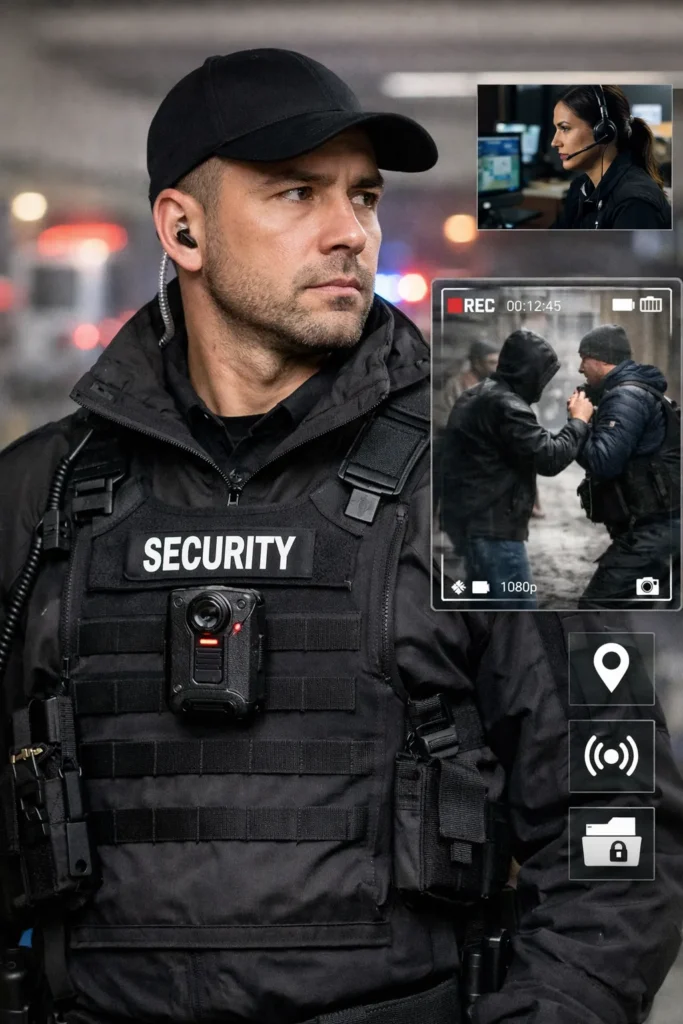
Body Worn Video that protects staff and strengthens evidence
Body-worn cameras support safer public-facing work by deterring aggression, improving accountability, and capturing reliable evidence when incidents occur.
What teams gain
- Reduced hostility through visible deterrence
- High-quality, tamper-resistant incident evidence
- Live support options with location awareness (where enabled)
- Simple operation with glove-friendly controls and SOS features
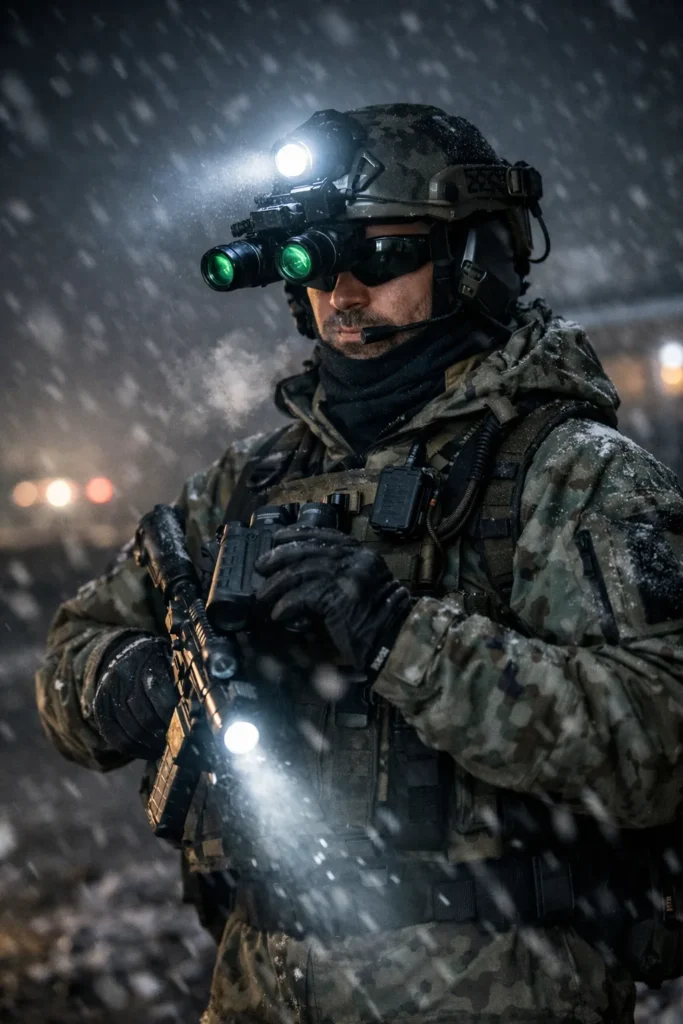
Mission clothing and optics for real conditions
From waterproof combat smocks and insulated jackets to tactical eyewear, illumination and observation tools, Comms-Spec supports clothing and optics that improve comfort, visibility and capability — helping teams operate longer and safer in demanding environments.
Related Solutions
From belts and carriers to packs and protective accessories, Comms-Spec supports the core kit that helps teams move, carry, protect and operate effectively.

Close Protection

Events
Stadiums

Hotels and Luxury Properties
Frequently Asked Questions
- What equipment is included in standard kits?
Contents are tailored to your risk profile and working environment.
Body armour and carriers: soft armour inserts, hard plates for higher threat levels, adjustable plate carriers, cummerbunds and load-bearing options.
Helmets and PPE: ballistic or bump helmets, eye protection, hearing protection, gloves and hi-vis where required.
Trauma kits: tourniquets, pressure dressings, haemostatic gauze, chest seals, trauma shears, nasopharyngeal airways, thermal blankets and marking pens.
Medical consumables: antiseptics, tape, plasters, saline pods, triangular bandages and burn dressings for minor injuries.
Carry options: individual first aid kits (IFAK), team bags, vehicle kits and wall mounted stations with tamper tags.
Support items: head torches, chemical light sticks, rescue hooks, casualty cards and laminated quick reference guides.
Comms-Spec helps you define kit levels by role, for example individual IFAKs for field staff and larger responder bags for supervisors or control vehicles.
- Do you provide training on the equipment?
Training and clear clinical governance are essential.
Training levels: we recommend accredited first aid at work as a baseline, with additional modules in catastrophic bleed control, airway adjuncts and chest seals for teams with elevated risk.
Skills maintenance: short, regular refreshers using realistic scenarios improve confidence and retention.
Standard operating procedures: simple, stepwise guides aligned to recognised guidance such as C-ABC for trauma care.
Clinical oversight: where advanced interventions are considered, medical direction and scope of practice must be defined.
Record keeping: incident forms capture what was used and why, to support debriefs and replenishment.
Comms-Spec provides training pathways, scenario packs and documentation templates that align equipment with competence.
- How do you handle expiry dates and replenishment?
Selection depends on threat, duty cycle and user profile.
Threat level: match armour certification to the likely threat, with options for soft armour against knives and handguns, and hard plates for rifle threats.
Fit and sizing: a proper fit reduces fatigue and improves mobility. We provide sizing sessions and multiple cut options for different body types.
Weight and heat: lighter materials and ventilated carriers improve comfort during long shifts.
Load carriage: pouches for radios, tourniquets and gloves are placed for quick access without snagging seatbelts or harnesses.
Compatibility: armour integrates with uniforms, outerwear and high-visibility overlays without compromising identification.
Trials with representative users help confirm comfort and access to critical items before a full roll out.
- How do you handle expiry dates and replenishment?
A simple regime keeps kits ready for immediate use.
Storage: IFAKs on person or on belt, team bags in vehicles or control points, and fixed cabinets in high-risk areas.
Inspection: monthly visual checks for seals, cleanliness and completeness, with quarterly deep checks.
Expiry management: an asset register tracks lot numbers and expiry dates, with colour coded stickers for quick identification.
Environmental care: avoid heat and moisture that degrade adhesives and dressings. Vehicle kits are placed away from direct sunlight where possible.
Replenishment: sealed refill packs simplify restocking after use or inspection. Tamper tags show kits are complete.
Documentation: checklists and digital logs provide an audit trail for compliance and insurance.
Comms-Spec supplies refill packs, inspection schedules and reporting that keep kits serviceable without excess waste.
- Are the products certified?
Yes. Integration improves speed and coordination.
Panic and duress: body-worn panic buttons and radio emergency features alert control with user ID and location.
Tasking: incident consoles create a medical task with location, checklist and timers, then route it to trained responders.
CCTV and digital twin: nearby cameras are cued automatically and the incident appears on a live map with access routes.
Post-incident review: logs, radio recordings and video bookmarks are linked to improve training and stock holdings.
Reporting: usage of consumables is captured to trigger automatic replenishment and cost tracking.
Comms-Spec configures these workflows so responders receive clear instructions while supervisors see progress in real time.
- Can kits be integrated with alert systems?
Quality and compliance protect both users and organisation.
Product standards: armour and helmets from reputable manufacturers with recognised ballistic and impact certifications, with test data available for review.
Medical consumables: CE or UKCA marked where applicable, with sterile items sourced from traceable supply chains.
Policies: clear scope of practice, consent and safeguarding considerations, and privacy policies for any health data recorded.
Records: training logs, kit inventories, inspection results and incident reports retained for agreed periods.
Liability and insurance: documentation supports audits, claims handling and continuous improvement.
Comms-Spec provides handover packs, maintenance schedules and service level support, along with options for refresher training and periodic kit reviews as risks evolve.