
Event Control Centre (Integrated Command Hub)
A fully equipped event control centre integrates multiple systems into one operational command point — enabling real-time visibility, coordinated communications and fast decision-making during complex events.
Why Event Control is essential for large-scale operations
With thousands of attendees, decisions must be fast, informed and coordinated. A purpose-built event control centre turns multiple moving parts into one operational picture.
Live oversight of crowd movement
Monitor hotspots and emerging issues in real time.
Faster verified response
Confirm incidents via CCTV before deploying teams.
Clearer staff coordination
Manage radios, teams and escalation from one place.
Better evidence and accountability
Record comms and capture incident information for review.
Protection from airborne threats
Detect and track UAV risks in open-air environments.
Reliable operations anywhere
4G and satellite connectivity for remote or temporary structures.
Tools that extend control across the event
These capabilities strengthen event control by improving visibility, coordination and operational resilience — especially when the event environment is temporary or high-risk.
Event control built around your venue and risk
Comms-Spec designs event control to match how your event actually operates — the scale, the crowd profile, the venue, the threat model and the response structure
Crowd oversight
We integrate CCTV and monitoring so crowd movement and developing issues are visible early, helping teams intervene faster.
Staff coordination
We implement dispatcher-led radio management so teams can be directed, tracked and supported with clearer control.
Incident response
Enquire TodayDrone protection
We deploy UAV detection capability to identify and track airborne threats, supporting earlier mitigation at open-air events.
Remote control rooms
We design control centres that work in temporary or remote structures, with the connectivity required to run critical systems.
Onsite support
We provide technical delivery, training and event-time support to keep operations stable and teams confident throughout the event.
Run the event with confidence
Event control is most effective when it’s engineered as a workflow: see → verify → communicate → coordinate → evidence.
One operational picture
Large events generate multiple simultaneous issues — crowd surges, medical incidents, security concerns and comms traffic. Without a single operational picture, teams lose time switching systems and key information gets missed.
An integrated control centre consolidates surveillance feeds, radio channels and alert systems into one command point. This improves situational awareness and makes decision-making faster and more consistent as conditions change.
How Comms-Spec adds value: We design the control environment around your event’s scale and complexity, integrating the right systems into a usable operational workflow rather than a collection of disconnected tools.
Radio control & evidence
During incidents, radio traffic spikes. Without structured control, messages get missed, teams overlap, and escalation becomes unclear. Afterward, a lack of evidence can create risk in investigations and disputes.
A dispatcher console enables event management to locate users via GPS, manage groups, initiate and receive emergency alarms, and record transmissions for playback and evidence when required.
How Comms-Spec adds value: We set up dispatcher workflows that suit your structure — including groups, monitoring and alarm handling — and ensure recording and playback capability is configured for operational use.
Visual verification
When you can’t see what’s happening, you’re forced into guesswork. That slows response, increases unnecessary deployments, and creates avoidable risk in crowded environments.
CCTV provides the “eyes on the ground,” and can be delivered using existing infrastructure or temporary pop-up systems to fill coverage gaps. This enables immediate visual confirmation and better response decisions.
How Comms-Spec adds value: We integrate CCTV into event control and ensure coverage matches event dynamics — using temporary systems where needed to provide the visual oversight required for effective management.
Connectivity for temporary sites
Event control is often housed in temporary or remote structures where reliable internet is not guaranteed. Without connectivity, critical systems can’t function properly and remote oversight becomes impossible.
4G and satellite connectivity provides a reliable communications backbone for event control — keeping systems online regardless of location and helping maintain performance under changing conditions.
How Comms-Spec adds value: We implement the right connectivity approach for the environment and the systems you need to run, supporting stable operations throughout the event rather than “best effort” connectivity.
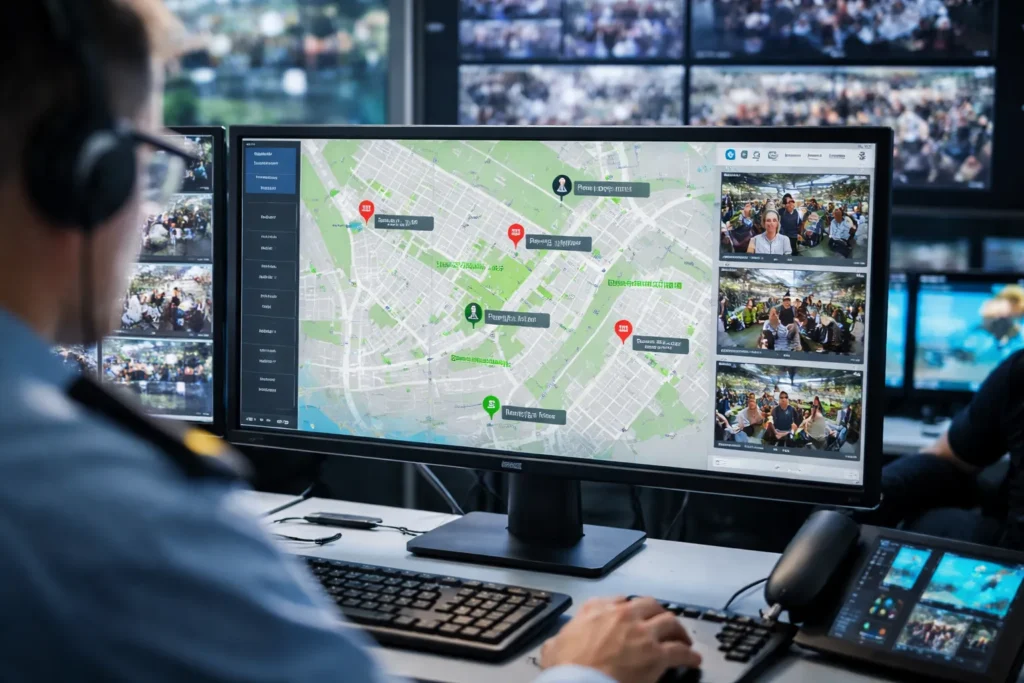
The right technology at your fingertips
Taking into account two-way radio dispatcher consoles, CCTV, UAV detection systems, remote connectivity and hybrid radio, Comms-Spec delivers a holistic event control approach — giving you the tools you need to run a well-managed, efficient and safe operation, regardless of size or global location.
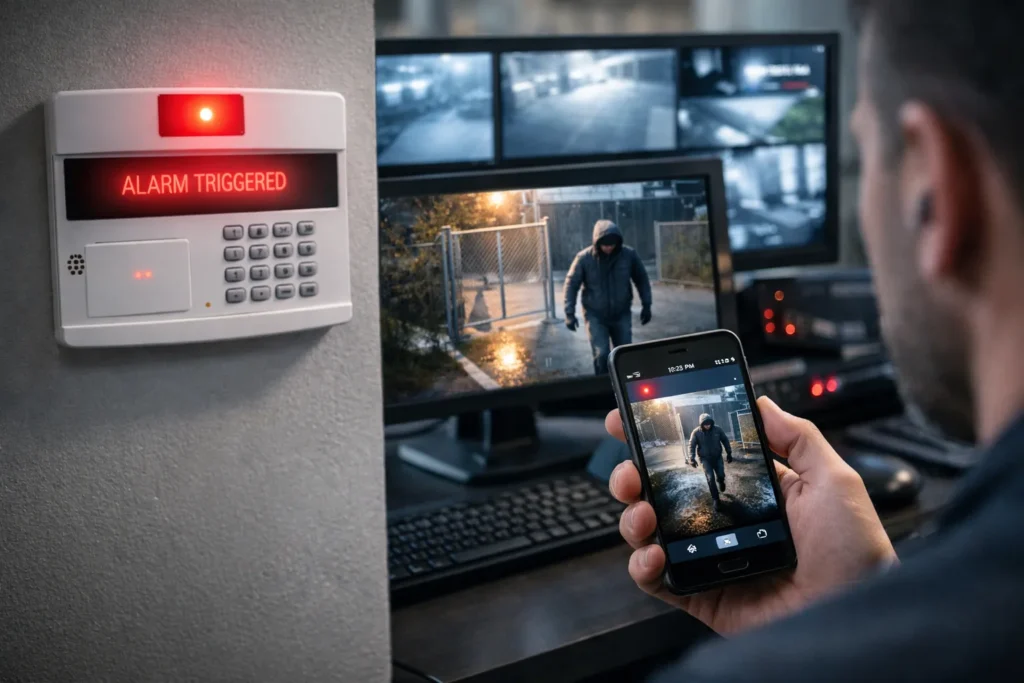
Event management on the move
Hybrid DMR radios extend event control beyond the control room. Staff can view CCTV, receive emergency alarms, manage messages and make radio transmissions from a single Android-based device — improving coordination while teams are active across the venue
Related Solutions
A fully equipped event control centre integrates multiple systems into one operational command point — enabling real-time visibility, coordinated communications and fast decision-making during complex events.
Events
Stadiums
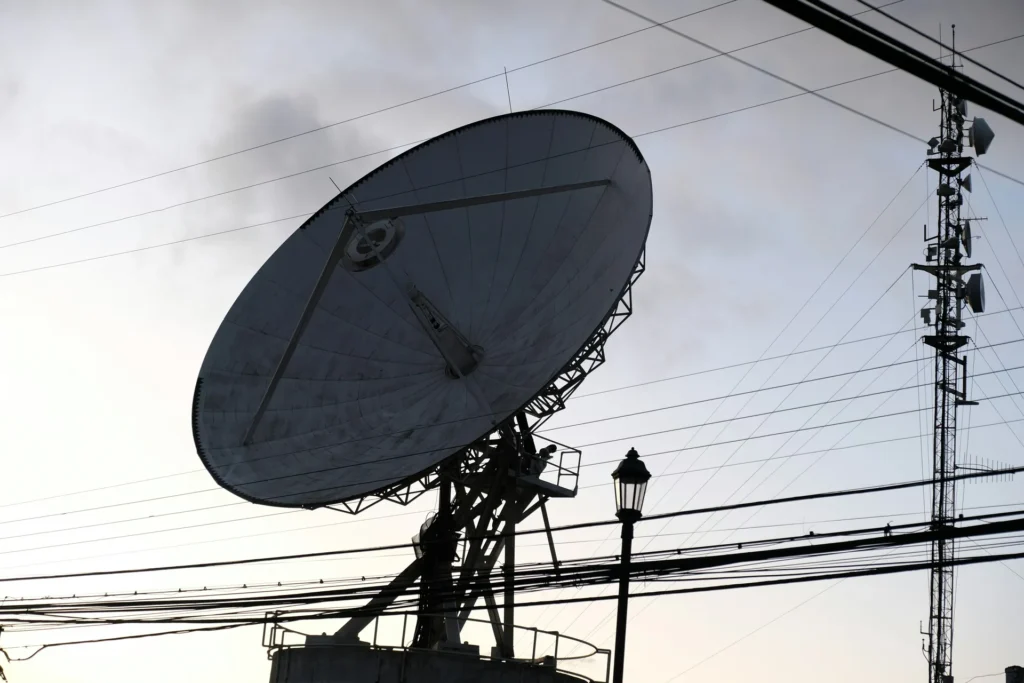
Remote Connectivity
Frequently Asked Questions
- What systems are visible in the control room?
The aim is full situational awareness without information overload.
Communications: dispatcher consoles for two-way radio, push-to-talk over cellular, and integration with VoIP telephony.
Video: live CCTV walls, pop-up camera call-ups on alerts, video bookmarking for incidents, and rapid evidence export.
Alarms and sensors: intrusion, panic, fire panel inputs, environmental sensors, people-counting and crowd density analytics.
Access and perimeter: door states, gate and turnstile activity, ANPR events at vehicle points.
Service and maintenance: ticket queues, device health, and work orders to keep the system reliable during the event.
External feeds: weather, public transport updates, UAV detection, and local authority notices.
Comms-Spec designs role based user interfaces with clear maps, filtered alert lists, and standard layouts for screens. Priority events appear at the top, with one-click access to the most relevant cameras, doors and playbooks.
- How do you ensure resilience?
Coordination is built on clear channels, defined roles, and repeatable procedures.
Talkgroup structure: separate groups for operations, security, medical, logistics, and traffic, with the dispatcher able to patch groups for joint response.
Tasking and tracking: incidents create tasks that are assigned to named teams with timestamps, location, and checklists. GPS from vehicles or team devices supports live tracking.
Pre-planned playbooks: when an alert arrives, the system proposes a checklist, contact list, and communication template suited to the incident type.
Cross-system actions: operators can open gates, lock doors, trigger announcements, and call camera presets from the same screen.
Common operating picture: wall displays show the live map, key cameras, and incident queues so everyone sees the same information.
We train supervisors and operators on radio discipline, escalation rules, and handover notes to maintain consistency over long shifts.
- Can multiple venues or sites be managed together?
Design starts with the assumption that things may fail during a live event.
Power: UPS for consoles, servers and network, with generator support where available.
Networks: dual links and diverse paths where possible, with automatic failover to cellular for critical services.
Servers and storage: high-availability recording and mirrored application servers sized for peak load.
Edge behaviour: cameras and controllers buffer locally during network loss, then back-fill when links return.
Radio fallbacks: defined simplex channels and emergency talkgroups if a repeater or gateway fails.
Runbooks: printed and digital quick guides cover failover steps, contact trees and minimum operating configurations.
Comms-Spec monitors health in real time and places spare equipment on site for fast swap if needed.
- Can multiple venues or sites be managed together?
Yes. We deliver fixed, temporary and mobile control rooms.
Temporary rooms: flight-case racks, portable video walls, and collapsible furniture that can be built and struck quickly.
Mobile units: vans or containers with masts, power conditioning, environmental control, and satellite or LTE backhaul.
Rapid deployment: small events can be live within hours using pre-staged kits. Large or multi-day events are surveyed in advance, with rehearsal the day before opening.
Integration on the move: pop-up CCTV, UAV feeds, and body-worn cameras are brought into the same platform so operators see one consistent view.
We provide on-site engineers for build, live support, and strike, with a post-event debrief and recommendations.
- How are incidents recorded and reported?
Good records improve response during the event and learning afterwards.
Structured incident forms: type, location, severity, attachments and links to relevant video or access events.
Timeline view: acknowledgements, task assignments, actions taken and closure notes with timestamps and user IDs.
Evidence handling: watermarked video exports with hash verification and chain of custody fields.
Automated reporting: heat maps of incidents, response time metrics, busiest periods and device faults.
Lessons learned: post-event reviews bring logs, radio recordings and video bookmarks together to refine staffing, signage and procedures.
Comms-Spec can integrate with your existing reporting platform or provide a built-in module with export to common formats.
- What training do operators receive?
Safety and compliance are essential, and people make the system effective.
Privacy: purpose-limited use of CCTV, privacy masking where required, role based access, and retention policies that match your governance.
Cybersecurity: unique credentials, multi-factor authentication, encrypted traffic, segregated networks, hardened devices, and signed firmware updates.
Access control to the room: secure entry for authorised staff only, visitor logging, and screen privacy when VIPs or contractors are present.
Training: induction on systems, radio discipline, and playbooks, plus drills that simulate likely incidents. Supervisors receive administration training and coaching on KPIs such as time to acknowledge and time to resolve.
Human factors: ergonomic furniture, lighting that reduces eye strain, clear audio paths, and shift handover templates that preserve situational awareness.
Comms-Spec provides operator guides, quick reference cards, and a helpdesk during live operations, with maintenance and updates scheduled outside event hours wherever possible.