
Mobile Coverage Network (Rolling Radio System)
This system turns your convoy into a moving communications network, providing multi-channel radio communications for vehicles and personnel as it travels — designed specifically for the realities of a rolling event.
Why convoy-specific communications matters
In a race convoy, communications aren’t a “nice to have” — they’re part of safety, coordination, and incident response. A purpose-built system reduces risk while improving control and efficiency.
Prevent comms blackouts
Maintain connectivity even across changing terrain and distance.
Reduce operational risk
Better coordination means fewer safety gaps and faster responses.
No fixed repeater burden
Avoid site surveys, costly installations and complex frequency planning.
Works through convoy splits
Local vehicle-to-vehicle comms remains available automatically.
Extend control beyond the convoy
Remote event control can monitor and communicate throughout the route.
Support media and engagement
Enable live radio feeds for broadcast teams and spectator streams.
Enhancements for event control, crews and media
These capabilities extend the convoy system to support start/finish crews, static sites, and broadcast needs — improving the event experience while strengthening control and safety
A convoy comms system built around the whole event
Comms-Spec delivers a holistic solution that accounts for the event as a whole — not just the race vehicles — helping you run safer operations with fewer unknowns.
Rolling coverage
We turn the convoy into a moving radio network, so coverage follows the event without fixed repeater dependencies.
No blackouts
We design for continuity and comms resilience so teams stay connected across varied terrain and route changes.
Convoy splits
Self-healing connectivity keeps local vehicle comms running automatically even if the convoy separates front-to-back
Remote control
We enable remote monitoring and two-way comms into and out of the convoy using 4G and satellite connectivity.
Media feed
We can live broadcast Radio Tour to support media teams and spectator engagement through streaming services.
Event crew
We provide fixed site comms for crews at start/finish locations and support communications needs for any static event elements.
Consistent comms across the route
Convoy communications works best when it’s engineered as a complete, managed system — designed for movement, terrain, splits, and real operational pressure.
Rolling convoy coverage
Fixed coverage planning works when everything stays in one place. But rolling convoys travel long distances across multiple days and varied terrain — creating dead zones and unpredictable comms dropouts at the worst moments.
A mobile coverage network solves this by turning the convoy into the communications infrastructure. The system moves with the event, providing multi-channel radio coverage without site surveys, fixed repeater installations, or complex frequency planning.
How Comms-Spec adds value: We deploy a system designed specifically for moving events, then install and manage it throughout the race so coverage remains dependable from day one to the final second.
Split convoy resilience
When the convoy stretches or splits, traditional comms setups can break into isolated pockets. That creates comms blackouts, slows decisions, and increases safety risk — especially when incidents happen at the back of the convoy.
A self-healing setup maintains automatic local communications even during major splits, keeping users connected to nearby vehicles and reducing the risk of total comms loss.
How Comms-Spec adds value: We design for “worst-case splits” and manage performance in the field, ensuring comms continuity remains practical and reliable when the convoy stretches across difficult terrain.
Remote event control
When event control is remote, lack of visibility into convoy comms slows response. Escalations take longer, and emerging incidents can grow before the right people are informed or able to intervene.
By utilising 4G networks and satellite connectivity, remote monitoring and two-way communications can extend inside and outside the convoy as it travels — improving oversight and enabling faster escalation before situations escalate.
How Comms-Spec adds value: We implement the connectivity layer and operational workflow so remote teams can monitor and communicate reliably throughout the route — not just when coverage happens to be good.
Broadcast & engagement
Radio communications are often valuable beyond operations. Without a managed feed, media teams and spectators miss out on an opportunity to create a richer, more interactive event experience.
A live Radio Tour feed can be broadcast to a streaming service, enhancing media coverage and giving spectators a more engaging view into the event narrative.
How Comms-Spec adds value: We support the live feed as part of the overall comms design, helping ensure broadcast capability doesn’t interfere with operational comms — and remains stable throughout the event.
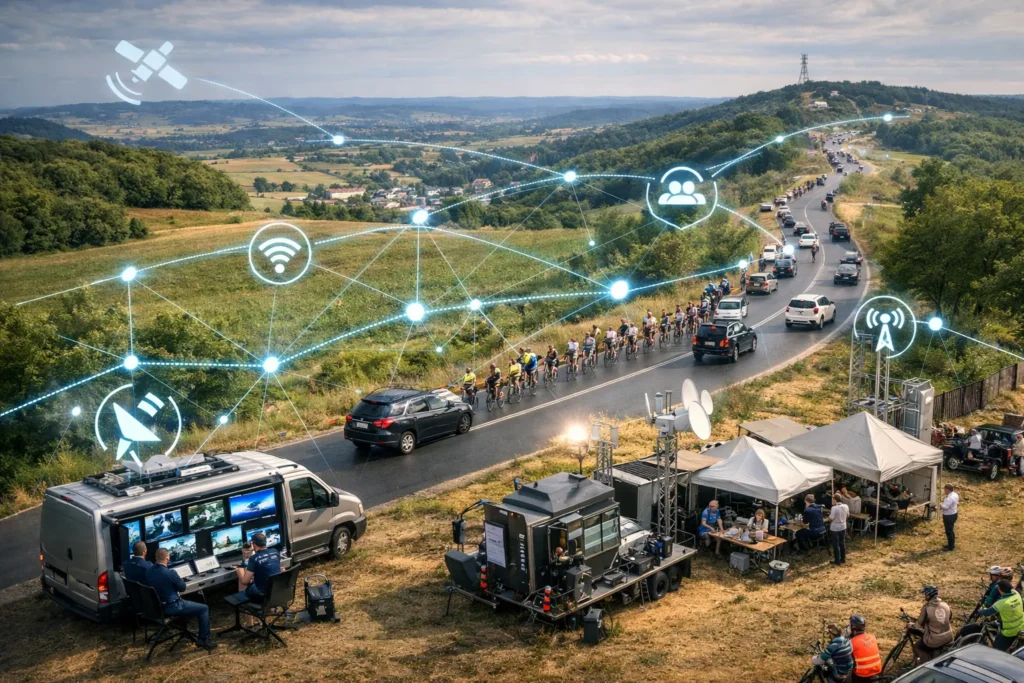
Proven capability for major cycling events
This convoy communications approach has been refined through long-term real-world use on major cycling events, supporting safer coordination and more reliable comms across multi-day routes and varied terrain.
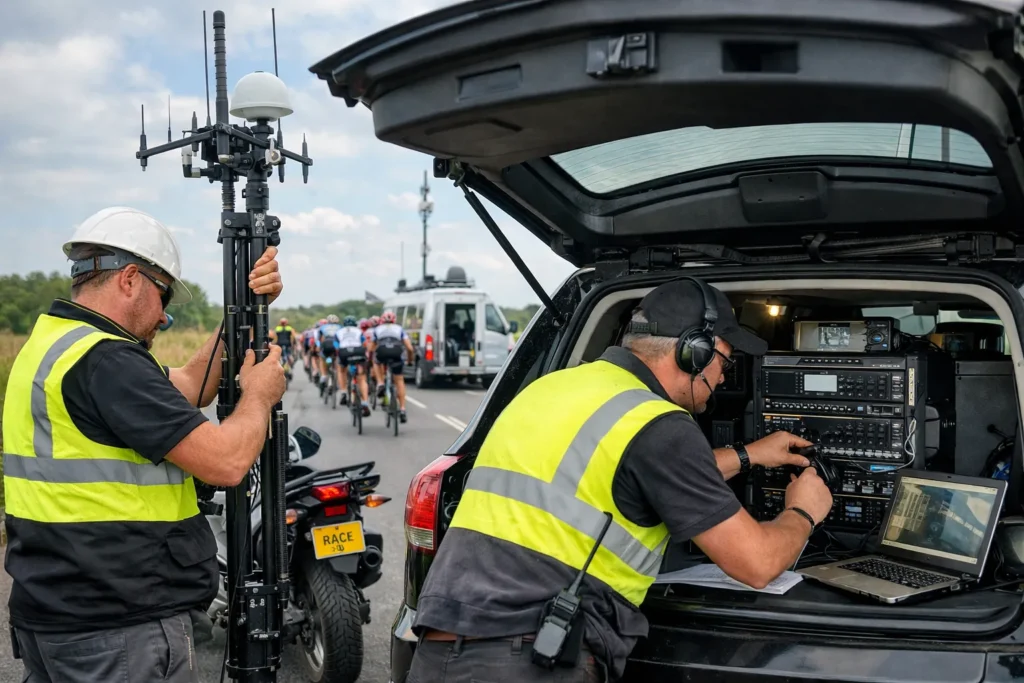
Onsite from day one to the last second
Comms-Spec engineers install and manage the system throughout the event — proactively monitoring performance, maintaining reliability, and resolving issues quickly so event organisers can focus on delivering the race.
Related Solutions
This system turns your convoy into a moving communications network, providing multi-channel radio communications for vehicles and personnel as it travels — designed specifically for the realities of a rolling event.
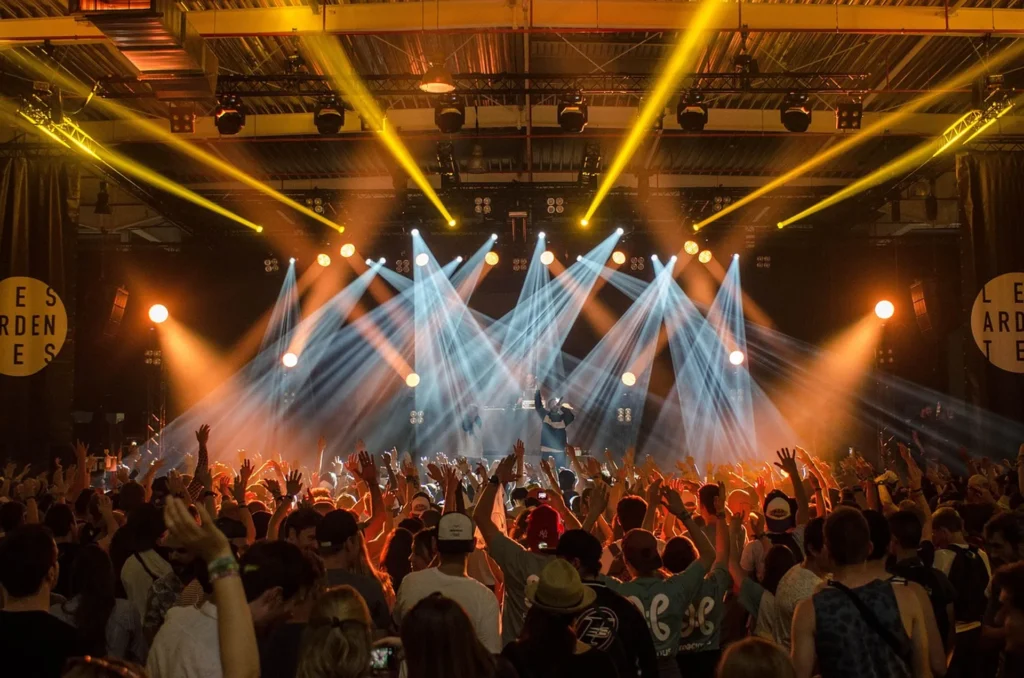
Events
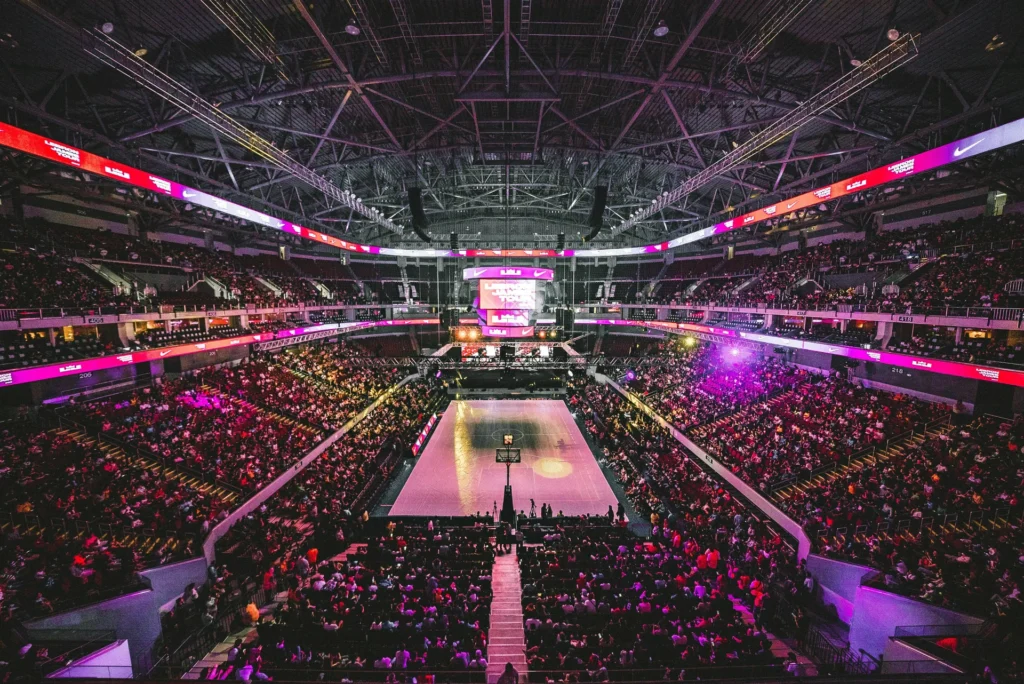
Stadiums
Remote Connectivity
Frequently Asked Questions
- How do you ensure reliable coverage along the entire course?
We start with a route survey and RF propagation study, then design a channel plan that fits the terrain and race format. Temporary hilltop repeaters provide wide area coverage, with in-vehicle repeaters for known blackspots such as valleys or urban canyons. Where the course is very long, we stage multiple sites with overlap and supervised handovers. Satellite or LTE backhaul links the convoy to event control when terrestrial links are unavailable. The day before the event we run test loops to validate audio quality, handover points, and emergency calling, then fine tune power levels and antenna placement.
- What radio equipment do you provide to vehicles and motorbikes?
Lead cars, commissaire vehicles, neutral service, medical cars, and motos receive compact mobile radios with hands-free PTT, noise-cancelling headsets, helmet kits for riders on motorbikes, and discreet external antennas. Power is fused and isolated from the vehicle start circuit to avoid reboots. All fitments follow manufacturer guidance with neat cable routing that does not obstruct controls or airbags. For motos we use low-profile gear, sealed connectors, and weatherproof PTTs. Installations are E-marked where required, and drivers receive a quick-start briefing covering safe use while in motion.
- Can tracking and incident data be shared with race control?
Yes. We provide a multi-talkgroup layout with clear discipline. Typical groups are race operations, commissaires, medical, logistics, and safety. A dispatcher console in event control can patch groups, create priority override for medical, and monitor all channels at once. GPS tracking from key vehicles feeds a live map with incident flags and convoy positions. Timing and neutral service can share status messages to reduce voice traffic, and all critical audio can be recorded for post-race review.
- Can tracking and incident data be shared with race control?
We coordinate licensed channels with the national authority in each country and obtain temporary event licences where needed. Channel plans use appropriate spacing, colour codes or CTCSS, and digital encryption where permitted to prevent casual eavesdropping. On race days our engineers carry spectrum analysers and spare channel allocations to mitigate unexpected interference from crowds or local systems. Radios are programmed with primary and secondary profiles so the convoy can switch quickly if conditions change.
- How do you manage interference from crowds and urban areas?
Coverage is built with overlapping cells and a documented fallback. Vehicles can switch to simplex on the same channel or a designated emergency channel if a repeater drops. Portable repeaters are held on standby to restore coverage in minutes. Critical sites use dual power, weather-rated enclosures, and monitored links. The dispatcher has preset patches to reroute traffic, and all crews receive a comms handbook with clear failover steps and call signs to reduce confusion during incidents.
- Are your systems compliant for international events?
For repeat routes we can pre-stage kits and complete installation within one to two days. For new routes we ask for maps and access details several weeks ahead so we can plan sites and permissions. On race day our engineers run the control room console, monitor channel health, and provide immediate support for any vehicle faults or headset issues. After the event we deliver a debrief report with coverage notes, incident timelines, and recommendations that help you refine future races.